
Overview
Vertigo is often described as a spinning sensation. For many people, it feels like loss of balance rather than movement. The room may seem to shift. The ground may feel unsteady. Even when still, the body may feel in motion.
If you are wondering what vertigo is, it is not a disease on its own. It is a symptom. It reflects how the brain processes balance and position. It often starts from a problem in the inner ear, the brain, or the pathway between them.
Some people call it a vertigo disease. In most cases, it is part of a larger balance problem with more than one cause. To understand why vertigo happens, it is important to look at the system that controls balance.
Many people ask if vertigo is dangerous. In most cases, it is not life-threatening. But it can affect balance and daily activity. Repeated or severe episodes need evaluation.

Symptoms
Vertigo symptoms can differ from person to person. The intensity and duration are not always the same.
Common symptoms include:
Spinning sensation
You may feel that you or your surroundings are moving.
Unsteadiness
Walking may feel difficult. Standing may not feel stable.
Nausea or vomiting
This is more common during a vertigo attack.
Sensitivity to head movement
Symptoms may worsen when you turn your head or change position.
Visual difficulty
You may find it hard to focus.
Some people report cervical vertigo symptoms, where neck movement or stiffness is linked to imbalance. In some cases, patterns differ in women. Hormonal changes, migraine, and stress may play a role. Not all symptoms appear together. The pattern often helps identify the cause.
Causes
To understand vertigo causes, it helps to look at how balance works. The brain and inner ear work together to control movement and position. When this system is disturbed, vertigo can occur.
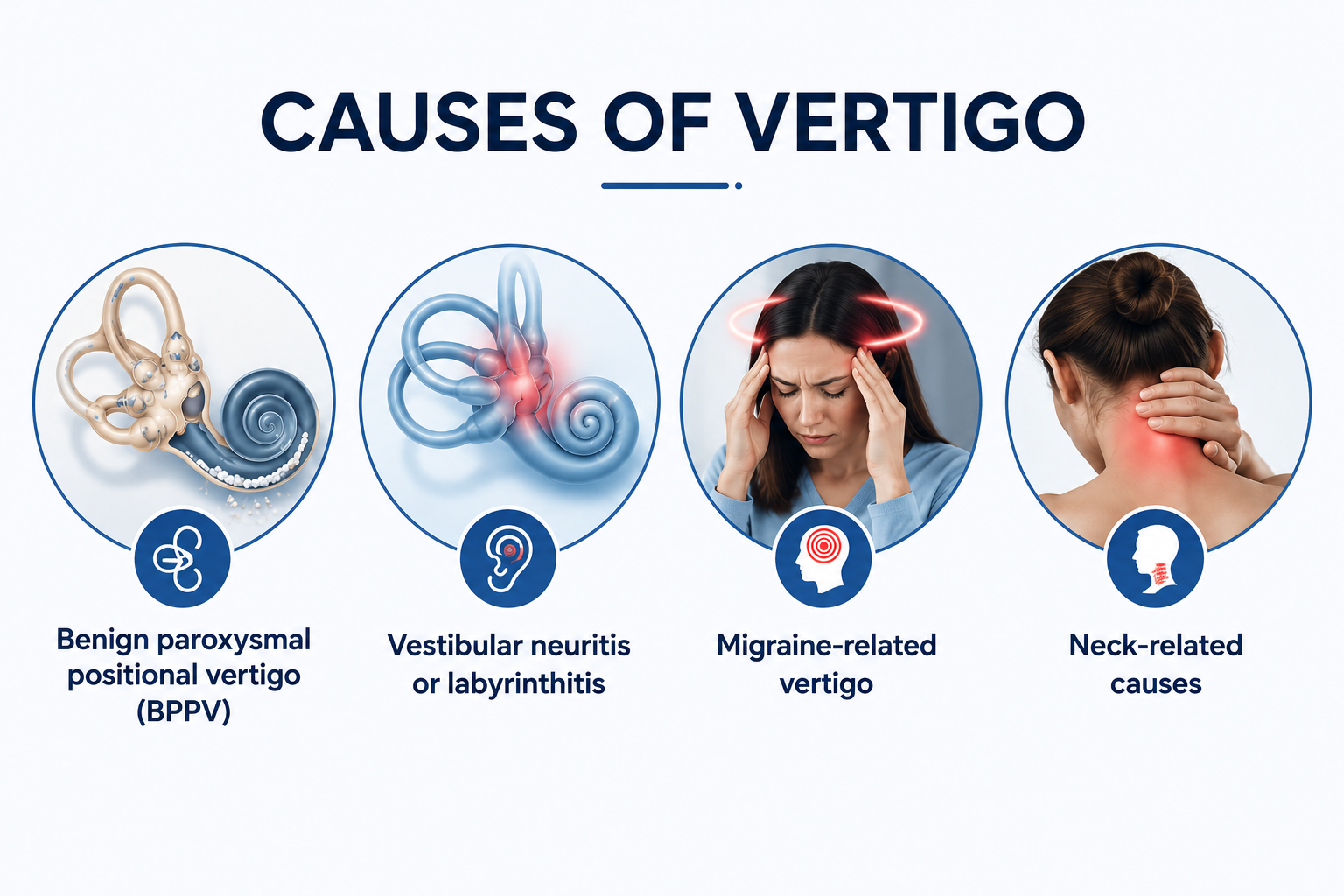
Common causes include:
- Benign paroxysmal positional vertigo (BPPV) Small crystals in the inner ear move out of place. This causes short episodes of vertigo with head movement. Symptoms often occur when lying down, turning in bed, or looking up.
- Vestibular neuritis or labyrinthitis Inflammation in the inner ear. This can cause sudden and longer-lasting vertigo.
- Migraine-related vertigo Vertigo may occur with or without headache.
- Neck-related causes Neck stiffness or strain may affect balance in some cases.
People often ask if anxiety can cause vertigo. Anxiety can increase or trigger symptoms in some people. Questions like whether acidity causes vertigo come up often. It is less common as a direct cause. In women, hormones, migraine, and lifestyle factors may influence symptoms.
Types of Vertigo
Vertigo can be grouped based on its source.
Also called BPPV. It is triggered by specific head movements.
This starts in the inner ear. It is the most common type.
This starts in the brain. It is less common and may need further evaluation. Each type has a different pattern and duration.
Risk Factors
Some factors increase the chance of vertigo.
- Inner ear problems
- Migraine
- Neck strain
- Stress
- Age-related changes
- In some cases, related conditions may run in families
Complications
Vertigo itself is not always harmful, but it can affect daily life.
Possible issues include:
- Risk of falls Imbalance during episodes increases the chance of falling.
- Difficulty with routine tasks Daily activities may become harder to manage.
- Reduced confidence while walking Fear of episodes may limit movement and independence.
- Reduced movement Repeated episodes may lead to reduced movement, which can affect balance further.

Diagnosis
Diagnosis starts with a clear history.
Doctors look at how symptoms started, what triggers them, and how long they last. Examination may include:
Eye movement testing
Balance assessment
Positional tests
These help identify inner ear causes. In some cases, further tests are needed.
Treatment Approach
Vertigo treatment depends on the cause. There is no single treatment for all types.
During an episode
- Sit or lie down
- Avoid sudden head movement
- This can reduce symptoms
Targeted treatment
Treatment is guided by the specific cause:
- BPPV is treated with repositioning maneuvers
- Inflammation may need medication
- Migraine-related vertigo needs trigger control
Long-term care focuses on reducing episodes and improving balance. Some cases improve well. Others need ongoing care.
Recovery and Rehabilitation
Recovery depends on the cause. Many people improve with treatment. Some need longer follow-up.
Rehabilitation may include:
- Balance exercises Targeted exercises to retrain the body's sense of stability and reduce episodes.
- Gradual movement training Carefully paced movement to help the brain adapt and reduce sensitivity.
- Posture correction Addressing posture and neck-related factors that may contribute to symptoms.
Episodes may last seconds, minutes, or longer depending on the condition.
Prevention
Not all cases can be prevented, but some steps help.
Steps include:
Maintain regular sleep
Manage stress
Correct posture
Stay active
Identifying triggers can help reduce future episodes
When to Seek Care
Seek medical care if you notice any of the following.
Early evaluation helps identify the cause and guide treatment.
What to Prepare Before an Appointment
A little preparation can make your visit more useful. It helps your doctor understand your symptoms clearly.
You can prepare by noting:
Your symptoms
Try to keep it simple. Think about:
- When did the symptoms start?
- How often do they occur?
- What makes them better or worse?
- How long do they last?
Your medical history
Include past illnesses and any family history of neurological conditions.
Medications you take
List all medicines, vitamins, and supplements.
Questions you want to ask
Write them down so you don't forget during the visit.
Support person (if needed)
You may bring a family member or friend to help remember details.
Important health details
Inform your doctor if you have medical devices, take blood thinners, or have a bleeding condition.