
Overview
A sense of imbalance is not always obvious. It does not always feel like spinning. In many cases, it is subtle. You may feel slightly unsteady while walking. You may hesitate before turning. You may notice that your balance is not as steady as before.
An imbalance disorder, also called a balance disorder, affects how the body maintains stability. Balance does not depend on one system alone. It involves the inner ear, the eyes, the brain, and signals from the body. These systems work together to keep you steady.
If you are wondering what a balance disorder is, it is not just about falling. It is about how the brain understands position and movement. When this process is affected, even simple actions can feel uncertain.
This is different from vertigo. Vertigo usually causes a spinning feeling. Imbalance feels more like unsteadiness or lack of control.
Symptoms
Balance disorder symptoms can vary. Many people find them hard to describe.
Common symptoms include:
Unsteady walking
You may drift to one side or feel unsure on uneven ground.
Difficulty standing still
You may feel the need to adjust your posture often.
Sensation of drifting
You may feel like your body is tilting, even when still.
Frequent tripping or near falls
This may happen more in low light or crowded spaces.
Dependence on vision
You may rely more on what you see to stay balanced.
Some people also notice ear balance disorder symptoms such as ear fullness, pressure, or hearing changes. In many cases, symptoms develop slowly. They may be ignored at first. Over time, they begin to affect daily movement.
Causes
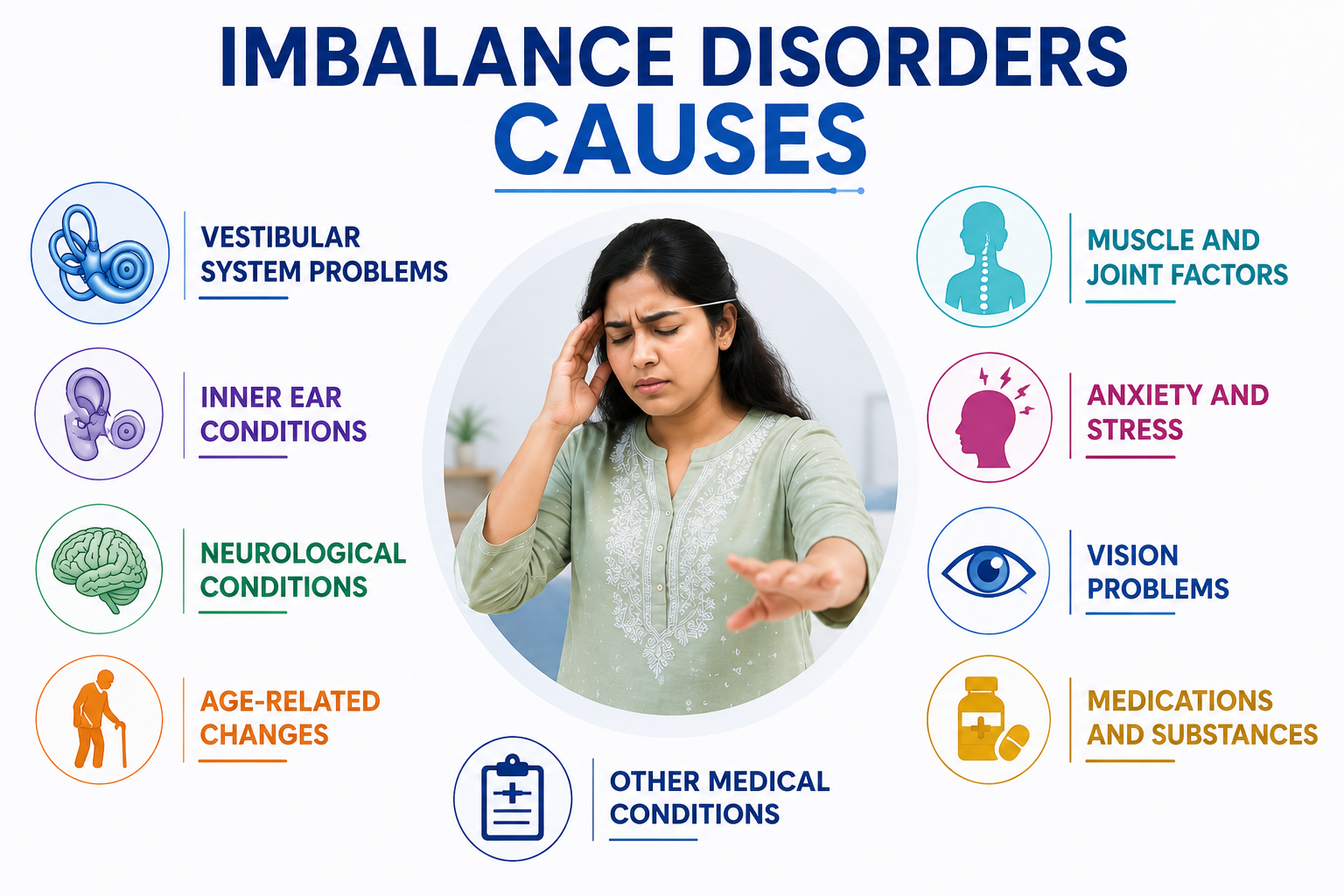
Balance disorder causes are often linked to more than one system.
Common causes include:
- Vestibular system problems The inner ear plays a key role in balance. A vestibular balance disorder can affect how movement is sensed.
- Inner ear conditions These are often called ear balance disorders. They may involve fluid changes, inflammation, or structural issues.
- Neurological conditions The brain processes balance signals. If this process is affected, coordination may change.
- Age-related changes Balance tends to decline with age. This is common in balance disorders in the elderly.
- Muscle and joint factors Weak muscles, joint stiffness, or poor posture can affect stability.
Some people ask if anxiety can cause imbalance. Anxiety can affect how stable you feel. It may increase awareness of movement and make imbalance feel worse. Questions about hormone imbalance or electrolyte imbalance also come up. These affect body function in general, but they are different from vestibular or neurological balance disorders.
Types of Imbalance Disorders
Balance problems can come from different systems.
This starts in the inner ear. It affects how movement and position are detected.
This is closely linked to the inner ear. It may include pressure, hearing changes, or fluid imbalance.
These involve the brain and nervous system. They affect how balance signals are processed.
In some cases, tests may appear normal, but symptoms are present. This is called functional movement disorder. It relates to how the brain processes signals rather than structural damage. It is important not to confuse these with other uses of the word "imbalance," such as chemical imbalance in psychiatric conditions. These are different from physical balance disorders.
Risk Factors
Some factors increase the risk of imbalance.
- Increasing age
- Previous inner ear problems
- Neurological conditions
- Low physical activity
- Poor posture
- Balance disorders in the elderly are common
- Vision, inner ear function, and muscle strength all change with age
Complications
Imbalance may seem mild at first, but it can affect daily life.
Possible complications include:
- Increased risk of falls Instability during movement raises the chance of falling.
- Reduced movement People may move less to avoid triggering symptoms.
- Avoidance of outdoor activity Uneven ground or crowded spaces may be avoided.
- Loss of confidence while walking These changes often develop slowly. Over time, they can limit independence.
Diagnosis
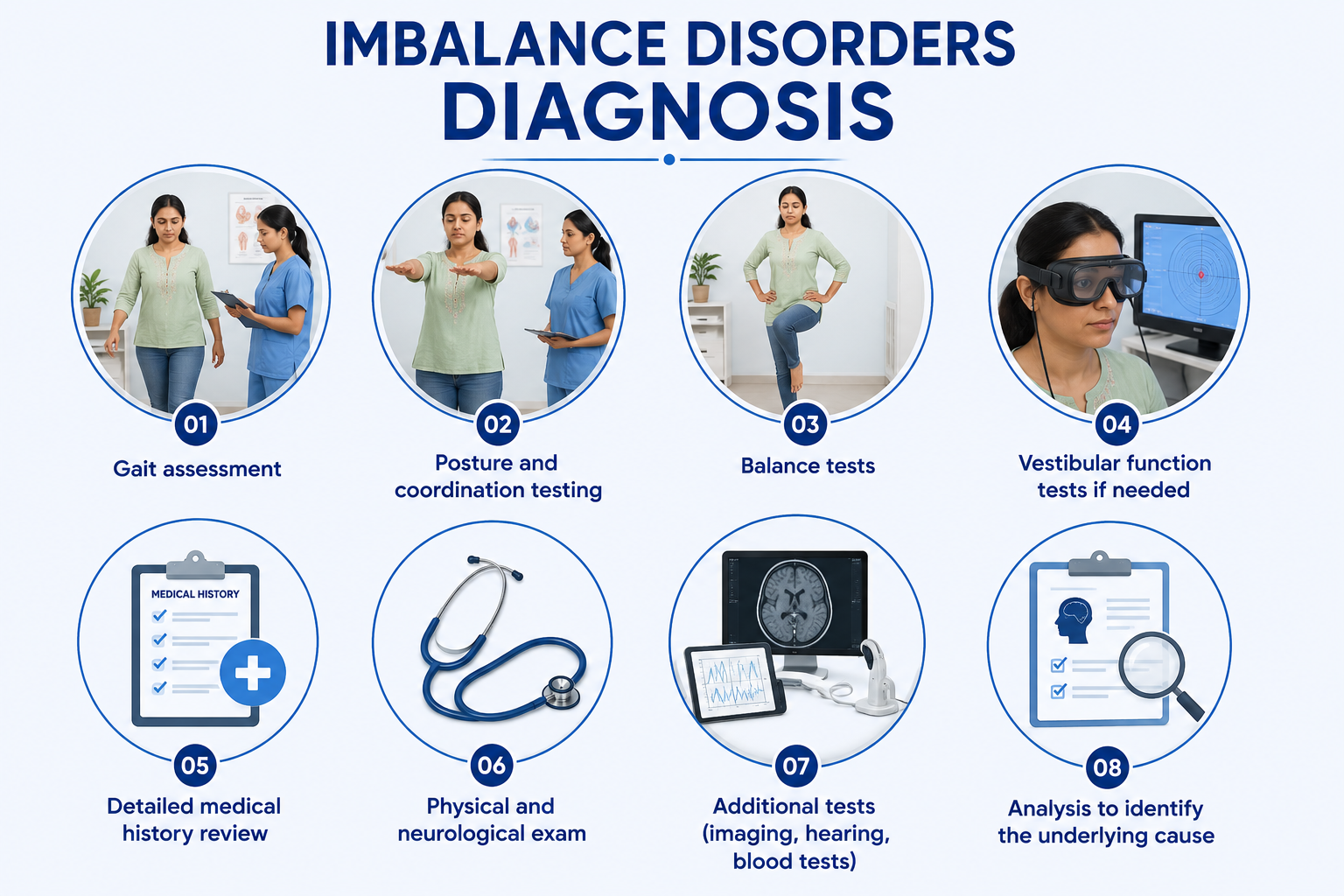
Diagnosis begins with a clear history.
Doctors look at when the imbalance started, what makes it worse, and how it affects daily activity. Examination may include:
Gait assessment
Posture and coordination testing
Balance tests
Vestibular function tests if needed
The aim is to identify the cause, not just confirm the symptom.
Treatment Approach
Balance disorder treatment depends on the cause. Treatment is not the same for everyone. It depends on the underlying cause.
Initial care
- The first step is to reduce fall risk and improve safety
Targeted treatment
Treatment is guided by the specific cause:
- Vestibular balance disorder may improve with specific exercises
- Ear balance disorder may need treatment of inner ear conditions
- Neurological causes need individual care
Rehabilitation plays a key role. It may include balance training, coordination exercises, and gradual exposure to movement. These help the brain adapt and improve control.
Recovery and Adaptation
Recovery depends on the cause and duration of symptoms. In many cases, the brain learns to adjust. It uses other signals to maintain balance. This takes time and regular practice.
Rehabilitation may include:
- Balance training Targeted exercises to retrain stability and improve the body's response to movement.
- Coordination exercises Focused movement drills to strengthen the connection between the brain and body.
- Gradual exposure to movement Carefully paced progression to help the brain adapt and reduce sensitivity over time.
Some people improve well. Others continue to have mild symptoms but learn to manage them.
Prevention
Not all balance disorders can be prevented. Some steps can help reduce risk.
Steps include:
Stay physically active
Maintain muscle strength
Correct posture
Manage medical conditions
Attend regular check-ups
These steps are especially important in older adults.
When to Seek Care
Seek medical advice if you notice any of the following.
Early evaluation helps identify the cause and guide treatment.
What to Prepare Before an Appointment
A little preparation can make your visit more useful. It helps your doctor understand your symptoms clearly.
You can prepare by noting:
Your symptoms
Try to keep it simple. Think about:
- When did the symptoms start?
- How often do they occur?
- What makes them better or worse?
- How long do they last?
Your medical history
Include past illnesses and any family history of neurological conditions.
Medications you take
List all medicines, vitamins, and supplements.
Questions you want to ask
Write them down so you don't forget during the visit.
Support person (if needed)
You may bring a family member or friend to help remember details.
Important health details
Inform your doctor if you have medical devices, take blood thinners, or have a bleeding condition.