Overview
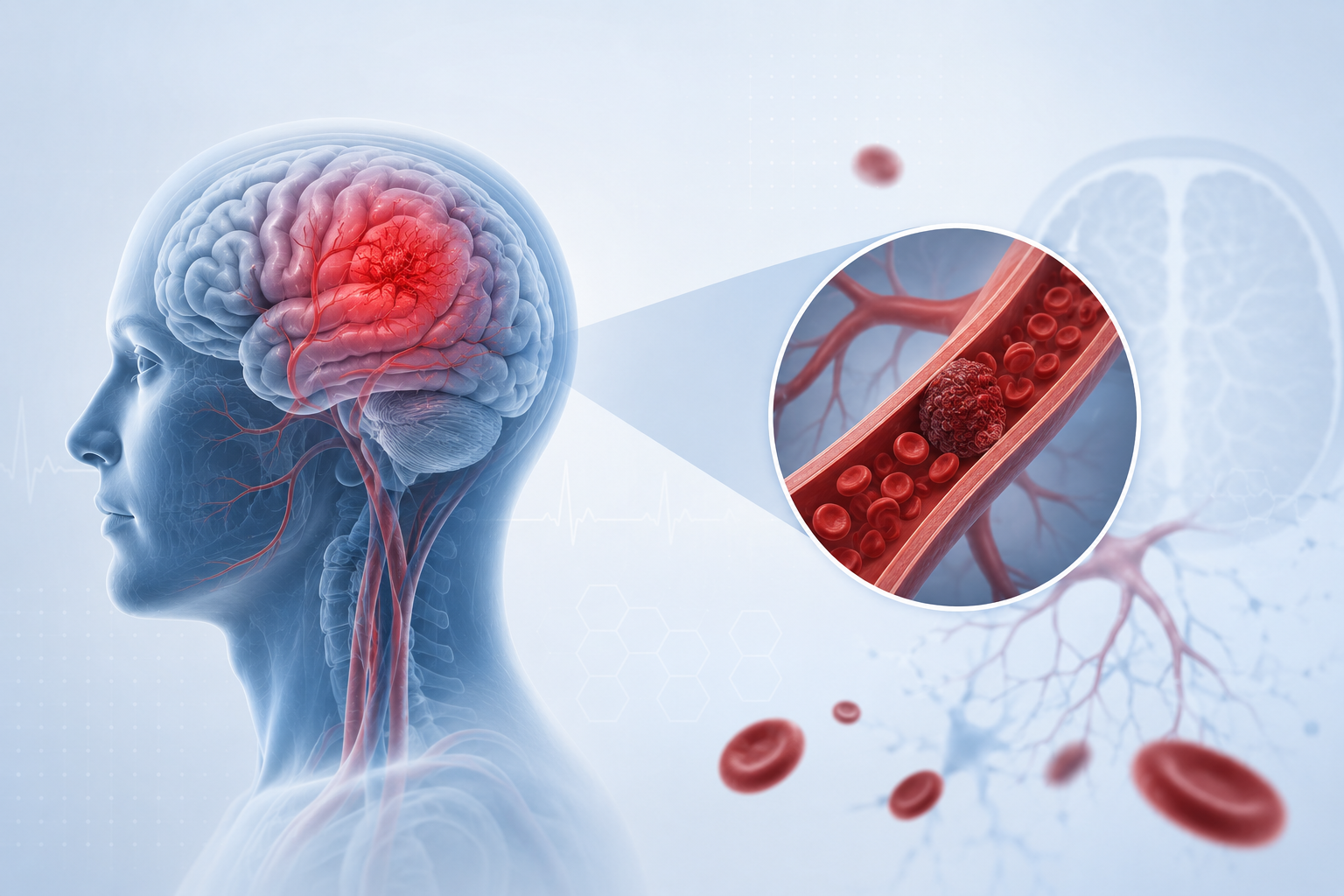
A brain stroke happens when blood flow to part of the brain stops or reduces. The brain needs a steady supply of oxygen and nutrients. When this supply is cut off, even for a short time, brain cells begin to get damaged.
If you are wondering what a brain stroke is or how it occurs, it usually happens in two ways. A blood vessel may get blocked, or it may rupture and bleed into the brain. The brain cannot tolerate this for long.
The effects depend on which part of the brain is involved. Some people may have trouble speaking or moving. Others may lose balance or awareness. In some cases, the effects improve. In others, they can last.
Many people ask if a brain stroke is dangerous. It can be. But early care can change the outcome. Recognising symptoms early and acting fast makes a real difference.
Symptoms
Stroke often starts suddenly. It may begin without warning. Recognising symptoms early can help reduce long-term damage.
Common symptoms include:
Trouble speaking or understanding
Speech may become unclear. You may not understand simple sentences.
Weakness in the face, arm, or leg
This usually affects one side. The face may droop. An arm may not stay raised.
Vision problems
You may notice blurred or partial vision.
Difficulty walking
There may be imbalance or loss of coordination.
Severe headache
A sudden headache with no clear cause.
There is a short window where early care can make a major difference. This is often called the "golden hour." Treatment during this time can help limit brain damage and improve recovery.
A simple way to remember warning signs is F.A.S.T.:
Even if symptoms improve, they should not be ignored.
Causes
A stroke happens when blood flow to the brain is disturbed.
Common causes include:
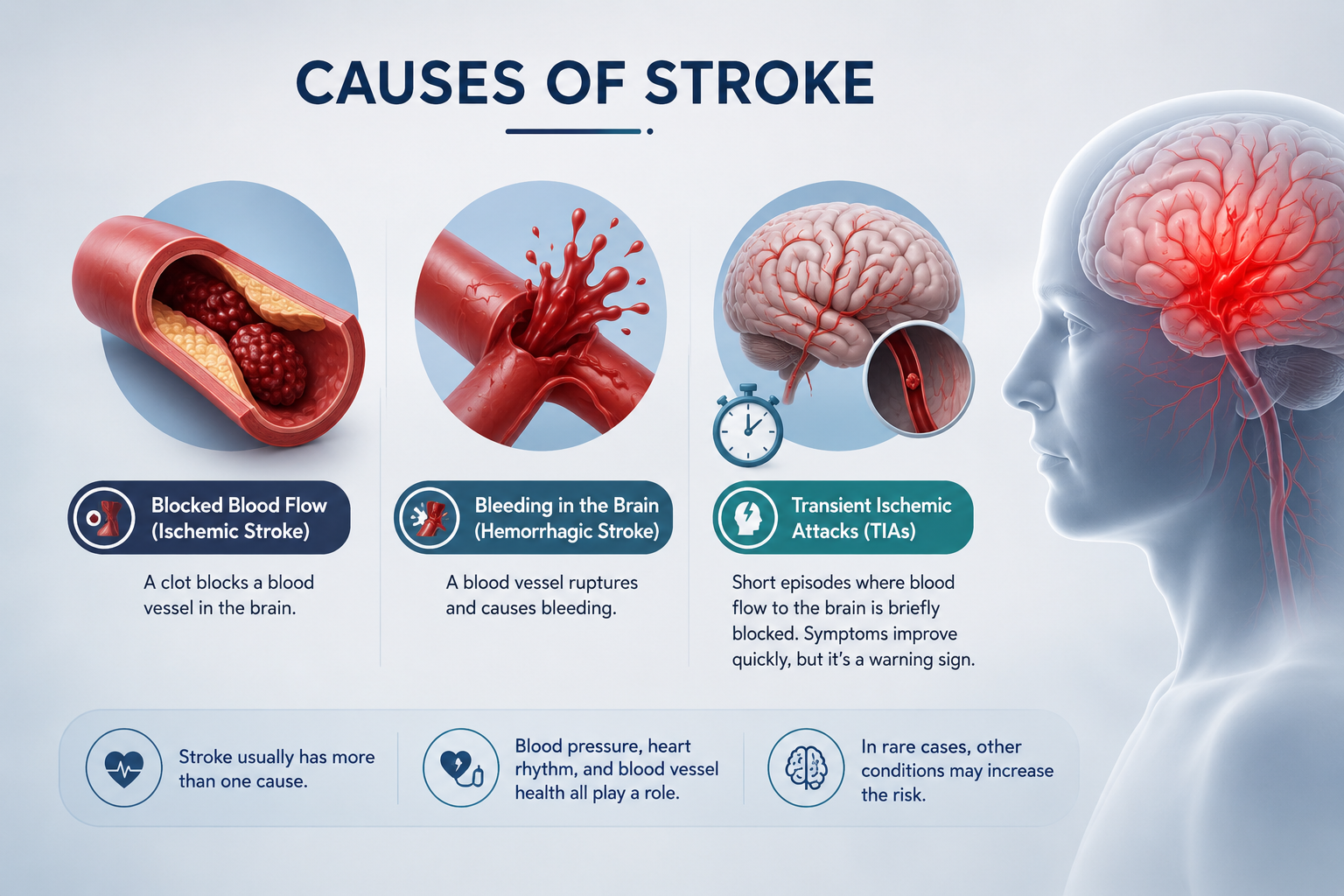
- Blocked blood flow (ischemic stroke) A clot blocks a blood vessel in the brain.
- Bleeding in the brain (hemorrhagic stroke) A blood vessel ruptures and causes bleeding.
- Transient Ischemic Attacks (TIAs) There are also short episodes called transient ischemic attacks (TIAs). Symptoms may last for a short time and then improve. Even then, they are a warning sign.
People often look for one reason, but stroke usually has more than one cause. Blood pressure, heart rhythm, and blood vessel health all play a role.
In rare cases, people ask if a brain tumor can cause a stroke. It is uncommon, but certain conditions may increase the risk.
Types of Stroke
Understanding the types helps guide treatment.
This is the most common type. It happens when blood flow is blocked. It may be due to:
- A clot forming in the vessel
- A clot traveling from another part of the body
This happens when a blood vessel bursts. It may include:
- Bleeding within the brain
- Bleeding around the brain
This is a temporary block. Symptoms improve, but the risk remains.
Risk Factors
Stroke risk builds over time.
- High blood pressure
- Diabetes
- High cholesterol
- Smoking
- Obesity
- Lack of physical activity
- Alcohol use
- Heart conditions
- Age
- Family history
- Previous stroke or TIA
Managing these factors helps reduce risk.
Complications
The effects of a stroke depend on the area of the brain and how early treatment is given.
Possible complications include:
- Weakness or paralysis May affect one or both sides of the body.
- Speech problems Difficulty forming or understanding words.
- Memory and thinking changes Cognitive function may be affected to varying degrees.
- Difficulty swallowing Can affect nutrition and daily function.
- Emotional changes Mood changes and emotional responses may shift.
- Altered sensation Numbness or changed feeling in parts of the body.
Recovery varies. Some improve steadily. Others need longer support.
Diagnosis
Diagnosis begins with early evaluation.
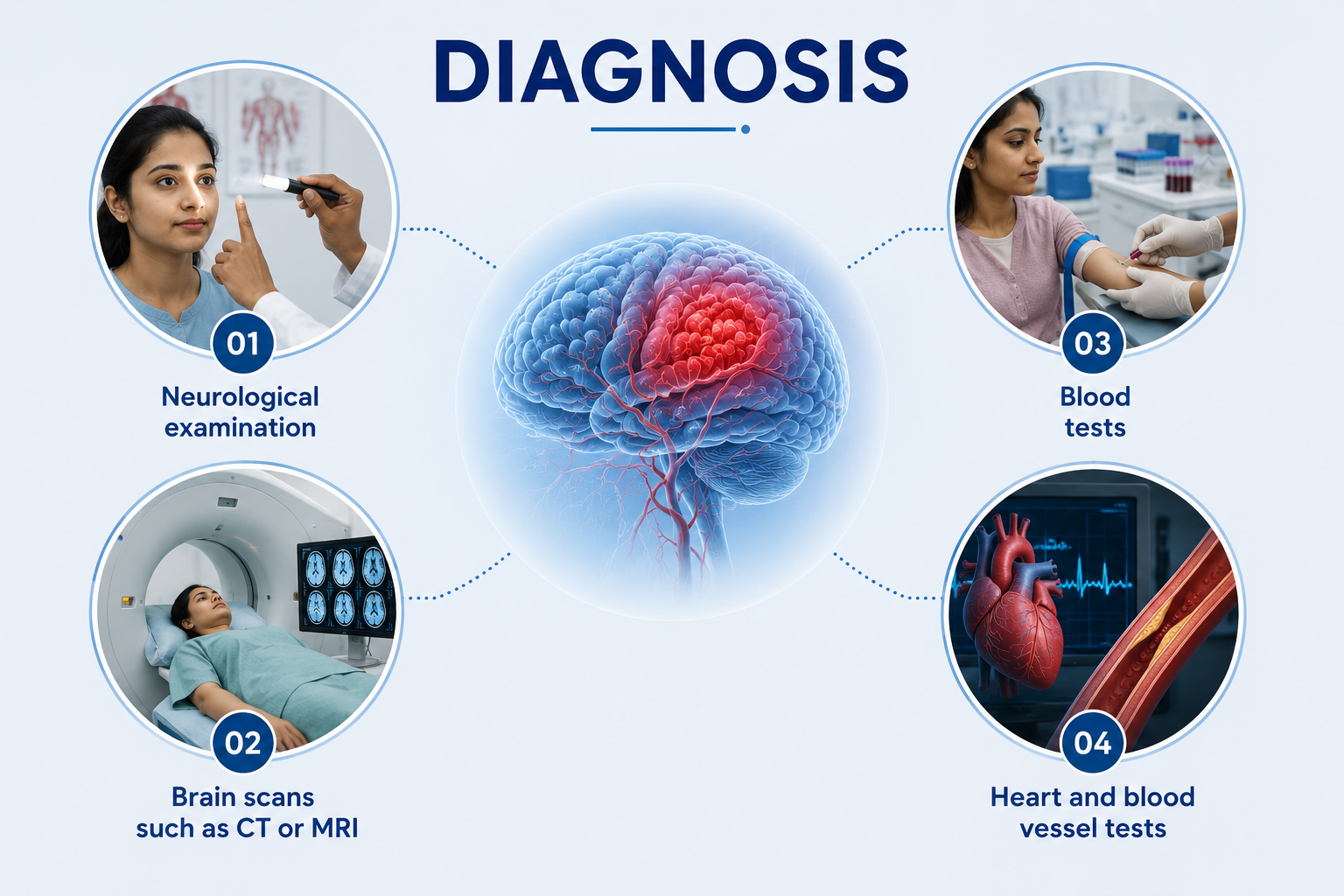
Doctors may use:
Neurological examination
Brain scans such as CT or MRI
Blood tests
Heart and blood vessel tests
The goal is to find the type of stroke and its cause.
Treatment Approach
Treatment depends on the type of stroke and how early care begins.
Immediate care
- In ischemic stroke, the aim is to restore blood flow. This may involve medicines or procedures.
- In hemorrhagic stroke, the focus is on controlling bleeding and reducing pressure in the brain.
Ongoing care
After the initial phase, care focuses on:
- Finding the cause
- Reducing future risk
- Supporting recovery
Each case needs an individual plan.
Recovery and Rehabilitation
Recovery looks different for each person. Some people regain independence. Others need support for daily activities.
Rehabilitation may include:
- Physical therapy Rebuilding strength, mobility, and motor function through guided movement and targeted exercises.
- Speech therapy Restoring communication skills and addressing swallowing difficulties with specialist support.
- Occupational therapy Regaining independence in daily activities and adapting to new abilities at your own pace.
Recovery takes time. The brain can adapt, but progress may be gradual.
Prevention
Preventing stroke focuses on long-term health.
Steps include:
Controlling blood pressure
Managing blood sugar and cholesterol
Avoiding tobacco
Staying active
Eating balanced meals
Regular check-ups
Small changes over time can reduce risk.
When to Seek Care
Stroke needs urgent care.
Seek help if you notice any of the following. Even if symptoms improve, do not ignore them. Early action can prevent further damage.
What to Prepare Before an Appointment
A little preparation can make your visit more useful. It helps your doctor understand your symptoms clearly.
You can prepare by noting:
Your symptoms
Try to keep it simple. Think about:
- When did the symptoms start?
- How often do they occur?
- What makes them better or worse?
- How long do they last?
Your medical history
Include past illnesses and any family history of neurological conditions.
Medications you take
List all medicines, vitamins, and supplements.
Questions you want to ask
Write them down so you don't forget during the visit.
Support person (if needed)
You may bring a family member or friend to help remember details.
Important health details
Inform your doctor if you have medical devices, take blood thinners, or have a bleeding condition.