
Overview
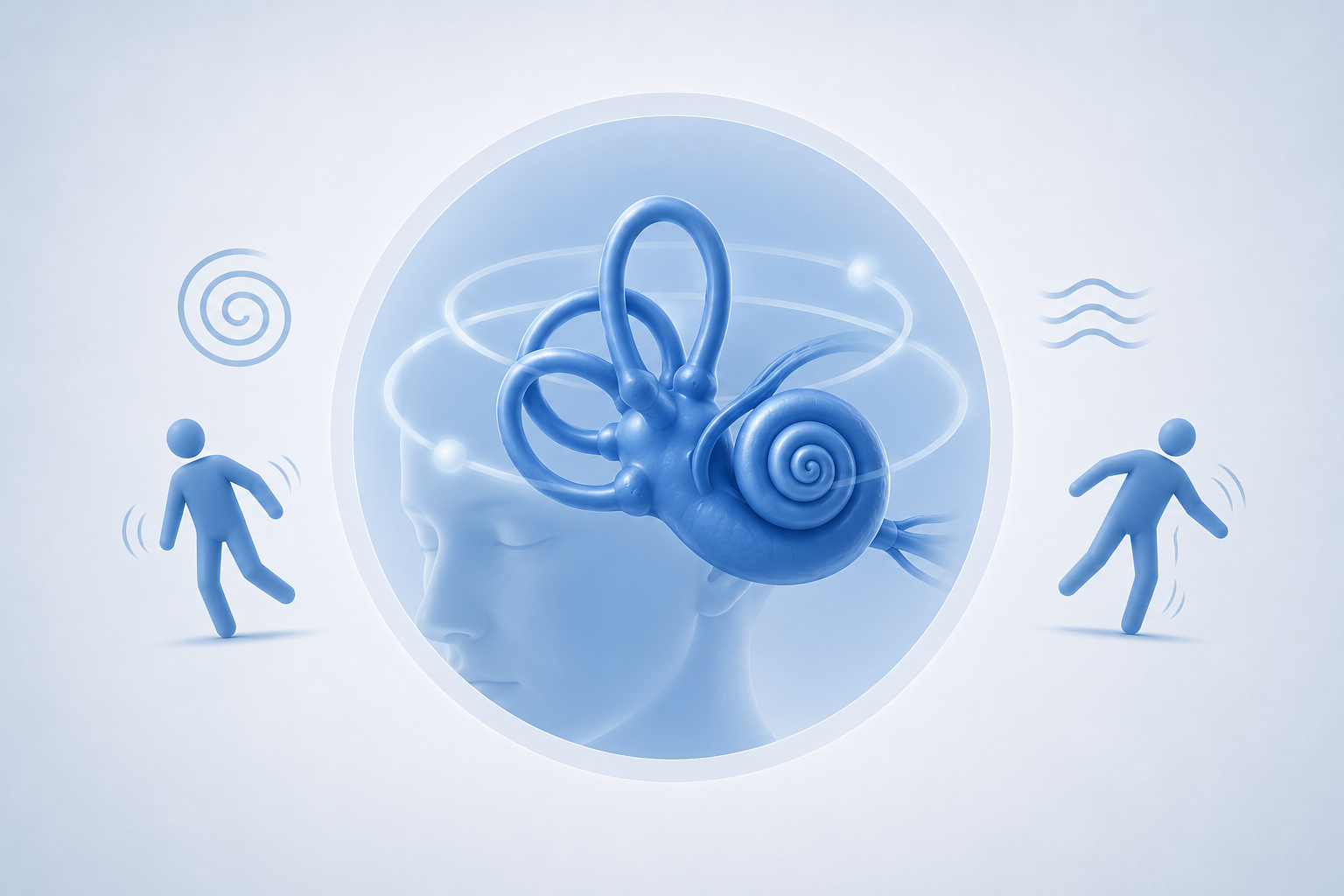
Balance problems don't look the same on everyone. One person describes a spinning sensation, as if the room itself is moving. Another just feels unsteady on their feet, hesitating before they turn a corner. Someone else feels lightheaded, or oddly disconnected from their own body for a moment. Different words, but usually the same underlying story: something has disrupted how the brain, inner ear, eyes, and body coordinate to keep you upright.
This isn't a disease on its own, it's a symptom, and a fairly common one. Most of the time it isn't dangerous, but if episodes keep coming back or start getting in the way of ordinary things, it's worth getting looked at rather than riding it out.
Symptoms
No two people describe this quite the same way. That said, a few patterns come up often:
Spinning or whirling feeling
Especially noticeable with head movement — the room seems to be moving even when you're still.
Unsteadiness while walking
A feeling of being unstable on your feet, particularly when turning or navigating unfamiliar spaces.
Lightheadedness
A floating or disconnected sensation, different from the spinning of vertigo.
Nausea during episodes
More common during intense episodes, and sometimes accompanied by vomiting.
Sensitivity to sudden movement
Rapid head turns or positional changes can trigger or worsen symptoms.
Brief visual blurring
Vision can blur briefly during episodes, making it difficult to focus.
Some people notice something with their ears as well, like fullness, pressure, or a change in hearing. Others find neck stiffness seems to set things off. These symptoms don't all show up together, and the specific combination is often what points toward the cause.
Causes
Balance isn't run by one organ working alone, so the list of possible causes is long.
- Inner ear problems Inner ear problems are probably the most common starting point. In some people, tiny crystals inside the ear shift out of position, causing short, sharp episodes tied to certain head movements. In others, the inner ear becomes inflamed, bringing on a longer, more sudden episode instead.
- Brain processing of balance signals Sometimes the issue sits higher up, in how the brain processes balance signals rather than in the ear. A sudden drop in blood pressure on standing, easy to overlook, is a frequent cause of lightheadedness.
- Migraine Migraine deserves a mention too, since it can trigger symptoms whether or not a headache comes with it.
- Neck strain and dehydration Neck strain, dehydration, a rough stretch of bad sleep — any of these can push mild symptoms into something more noticeable. They don't start the problem but make it worse once it's there.
- Stress and anxiety Stress and anxiety work similarly. They rarely cause a balance disorder alone, but they turn up the volume once symptoms exist.
- Hormonal changes Hormonal changes can shape how things present too, particularly for women.

Types
Balance disorders tend to get grouped by where the problem starts.
Issues based in the inner ear. These are the most common by far.
Issues rooted in the brain. These show up less often but usually call for closer evaluation.
Set off by specific movements like lying down or rolling over in bed.
In some people, every test comes back normal even though symptoms are real. What's usually described is a functional presentation, where the issue lies more in how the brain processes signals than in any visible damage.
Risk Factors
A handful of things raise the odds of running into balance trouble.
- Previous inner ear issues
- History of migraine
- Neck strain
- High stress
- Poor sleep
- Dehydration
- Age — vision, inner ear function, and muscle strength all shift gradually
- There also seems to be a hereditary thread in some cases
Complications
If left alone, balance issues rarely stay the same; they tend to build.
- Risk of falling The most obvious risk is falling, with unsteadiness during episodes creating a genuine physical danger.
- Reduced activity There's a quieter effect too: people start skipping activities that make them feel unsteady, which means less movement, and less movement can make balance worse.
- Loss of confidence Confidence often takes a hit well before symptoms get severe. The fear of an episode can become as limiting as the episode itself.

Diagnosis
It usually starts with a conversation: when did symptoms begin, what brings them on, and how long do they last.
From there, a doctor will often check:
Eye movement — how the eyes respond during and between episodes
Gait and posture — how you walk and hold yourself
Positional tests — how the body responds to specific movement sequences
Further investigation where the cause isn't immediately clear
The point isn't just confirming a problem exists; it's figuring out where in the system it's coming from, since that changes what treatment looks like.
Treatment Approach
There isn't one treatment that works across the board, since the causes differ so much.
During an episode
- Sit or lie down and avoid sudden movement — this tends to help in the middle of an episode
Targeted treatment
Beyond immediate relief, treatment gets specific:
- Certain inner ear conditions respond to particular repositioning techniques
- Inflammation might call for medication
- Migraine-related episodes often improve once triggers are managed
- If blood pressure or hydration is the root cause, that gets addressed directly rather than treated as a standalone balance issue
Longer term, the focus shifts to cutting down how often episodes happen and rebuilding confidence in movement. Some people improve fairly quickly; others need a longer stretch of ongoing care.
Recovery and Rehabilitation
How long recovery takes depends on the cause and how long symptoms have been around.
- Balance training Targeted exercises to retrain the body's sense of stability, helping the brain adapt to whatever balance cues are still working well.
- Gradual movement exercises Carefully paced movement to help the brain recalibrate and reduce sensitivity to the triggers that previously brought on symptoms.
- Posture work Addressing posture and neck-related factors that may be contributing to or worsening symptoms.
Given time, many people's brains adapt, learning to lean on whatever balance cues are still working well. It's not an overnight fix, but consistent effort tends to pay off.
Prevention
Not every episode can be headed off, but a few habits genuinely help.
A regular sleep schedule
Managing stress
Staying active
Good posture
Drinking enough water
It also helps to figure out your own personal triggers — whether that's a head position, a stressful stretch, or skipping meals. Once you know what sets things off, avoiding it gets easier.
When to Seek Care
If episodes are happening often, getting worse, or interfering with daily life, it's worth getting evaluated.
Catching the cause early usually makes treatment more straightforward.
What to Prepare Before an Appointment
A bit of preparation makes the visit more useful.
Your symptoms
- When they started
- How often they show up
- What makes them better or worse
- Roughly how long each episode lasts
Your medical history
Include anything relevant in the family, particularly any history of related conditions.
Medications and supplements
A list of current medications and supplements — some can directly affect balance and inner ear function.
Questions you want to ask
If you've got questions, jot them down beforehand; it's easy to blank once you're in the room.
Bring someone along
Bring someone along too if you'd like a second set of ears — a family member or friend who has observed your episodes can offer clinically useful detail.
Important health details
Mention any medical devices, blood thinners, or bleeding conditions early on.