
Overview
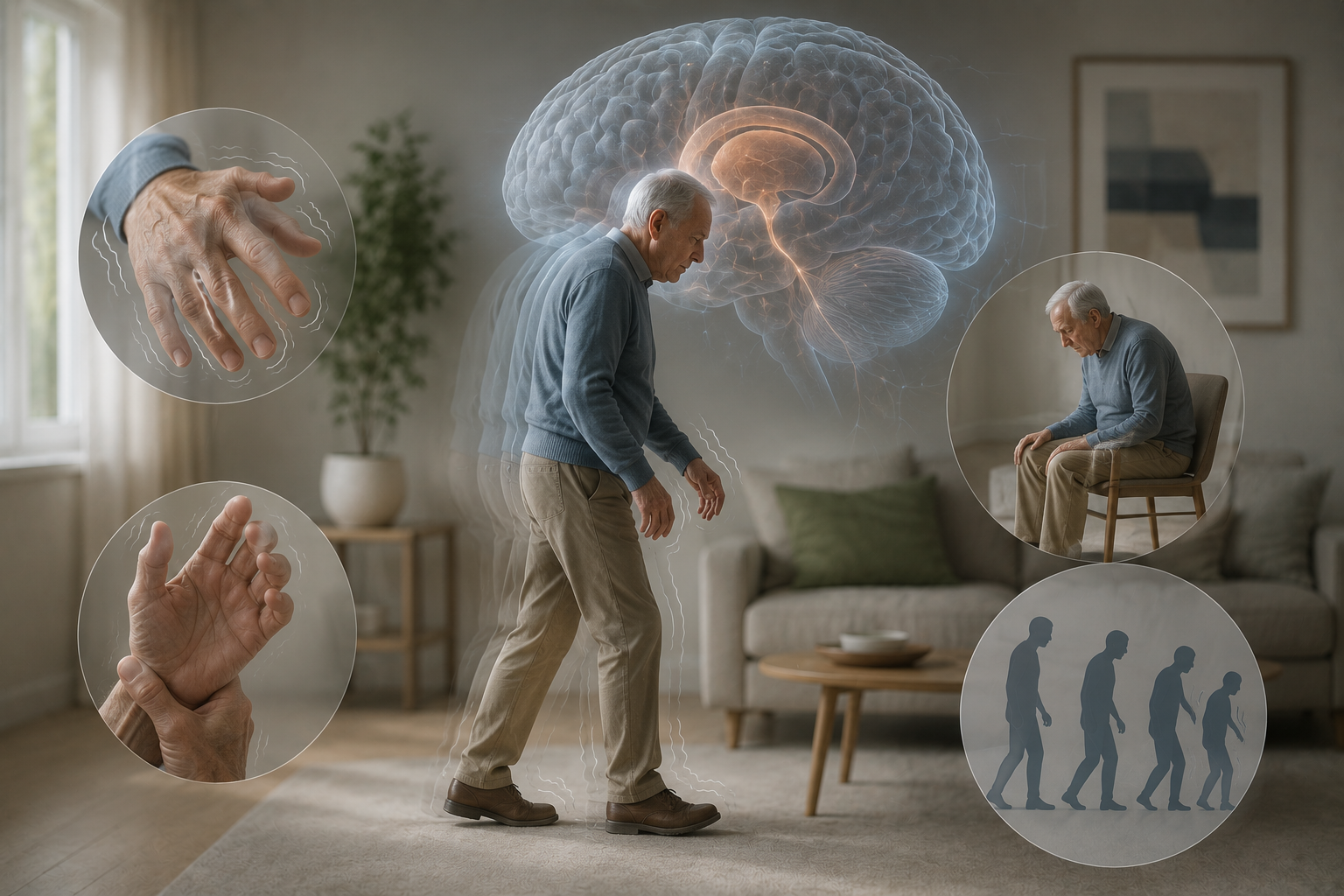
Movement disorders are neurological conditions that change the way the body moves. For some people, movement becomes slower and harder to initiate. For others, the problem runs the other way: movements happen that they didn't intend and can't control.
The effects show up in everyday life. Walking, balance, speech, handwriting, facial expressions, the ability to do ordinary tasks without thinking. When any of these start changing in ways that don't feel right, it's worth paying attention.
These conditions vary widely in cause and character, which is why getting the diagnosis right is the most important first step. Treatment built on the wrong assumption doesn't help anyone.
Why Early Attention Matters
Movement changes have a way of getting explained away. Ageing. Stress. A bad week. And sometimes that's all it is. But when symptoms persist, or when they're getting gradually worse, they deserve proper evaluation.
Picking up a movement disorder early and managing it with a structured plan can make a meaningful difference to how well someone functions over time. Mobility is easier to maintain than to recover. Independence, once lost, is hard to rebuild. Early recognition keeps more options on the table.
Who Benefits From Treatment?
If any of these have been showing up, it's worth getting properly assessed:
Shaking or trembling
Shaking or trembling in the hands, head, voice, or elsewhere.
Stiffness or rigidity
A sense of stiffness or rigidity in the muscles.
Slower movements
Movements that feel slower than they used to.
Unintended movements
Movements happening without intention that can't be stopped.
Walking difficulties
Trouble walking, or a noticeable change in how someone walks.
Falls or unsteadiness
Falls, or a feeling of being unsteady.
Changed handwriting
Handwriting that looks noticeably different from before.
Repetitive movements
Repetitive movements or muscle spasms.
Abnormal postures
The body holding itself in positions that feel forced or abnormal.
What Is a Movement Disorder?
Put simply, it's a neurological condition where the brain's control over movement is disrupted. That disruption can go in two directions.
Hypokinetic disorders involve too little movement. Things become slow, stiff, difficult to start. The person knows what they want to do but the body takes longer to respond.
Hyperkinetic disorders involve too much movement, or movement that happens outside the person's control. Tremors, tics, involuntary jerks, sustained abnormal postures.
Which category applies matters because it shapes everything that follows in terms of investigation and treatment.
Types of Movement Disorders
Probably the most widely recognised movement disorder. Parkinson's typically involves tremor, slowness, muscle stiffness, and balance problems. It develops gradually, which means early symptoms can be subtle and easy to attribute to something else.
Dystonia causes involuntary muscle contractions that result in abnormal postures or repetitive movements. It can affect a single area of the body or multiple regions. The severity and impact on daily life vary considerably from person to person.
This one is frequently misunderstood. Functional movement disorder produces real, often disabling movement symptoms, but without structural damage to the nervous system. It's a genuine neurological condition that responds to the right treatment approach.
Repetitive limb movements that typically happen during sleep. Many people with this condition aren't aware of the movements themselves, but notice the effects: disrupted sleep, waking unrefreshed, daytime fatigue.
Repetitive, seemingly purposeless movements that occur in certain neurological or developmental contexts.
Some neurological conditions affect eye movement and visual tracking in ways that interfere significantly with daily activities, driving, and reading.
What Causes Them
Movement disorders can arise from a range of neurological causes. Identifying the cause matters because it directly shapes which treatment approach is most likely to help.
- Neurodegenerative conditions Progressive conditions where nerve cells deteriorate over time, affecting movement control pathways in the brain.
- Genetic disorders Some movement disorders have a hereditary component that can be identified through family history and genetic testing.
- Stroke or brain injury Damage to the motor pathways in the brain from stroke or traumatic injury can produce a range of movement symptoms.
- Medication effects Certain medications can cause or contribute to movement symptoms. A thorough medication review is always part of the assessment.
- Metabolic disorders Disorders affecting the body's metabolic processes can sometimes produce neurological and movement symptoms.
- Functional neurological conditions Real, disabling movement symptoms that arise from how the nervous system is functioning rather than structural damage.
How They Get Diagnosed
Diagnosis starts with a detailed neurological assessment. Movement patterns, gait, and coordination are observed directly. Medical history, medication review, and family history all contribute to the picture. Brain imaging and additional neurological testing are added when the clinical assessment points toward them.
What makes movement disorder diagnosis distinctive is how much information comes from simply watching someone move. The pattern, the quality, the timing of movements — these details are often more telling than any single test result.
Treatment Options
Medication Management
Many movement disorders respond well to medication, either by improving movement control or reducing involuntary movements. What gets prescribed is specific to the condition being treated, not a generic approach to movement symptoms.
Physiotherapy and Movement Training
Structured physical therapy works on mobility, strength, flexibility, balance, and walking ability. For most movement disorders, this is a core part of long-term management rather than an optional add-on.
Occupational Therapy
Helps patients adapt the way they approach daily tasks to maintain independence as conditions evolve. Practical, person-centred, and often undervalued.
Speech and Swallowing Therapy
Some movement disorders affect speech clarity and the mechanics of swallowing. Specialised therapy addresses both and has real implications for safety and quality of life.
Advanced Treatment Approaches
For certain conditions, and in selected patients where symptoms are significantly affecting quality of life, more advanced neurological interventions may be considered. These are evaluated individually based on diagnosis and circumstances.
Recovery and Long-Term Management
Most movement disorders are managed over the long term rather than resolved with a course of treatment. The goals shift accordingly: maintaining mobility, preserving independence, keeping symptoms controlled, preventing complications, and supporting overall neurological health.
Regular follow-up is built into this. Symptoms change over time, and treatment plans need to evolve with them rather than staying fixed at what was appropriate at diagnosis.
When to Seek Care
If any of the following have been showing up, it's worth getting properly assessed.
Early recognition keeps more options on the table. Mobility is easier to maintain than to recover.
Dr Prabash's Approach
Every assessment starts with observation. Before any conclusions are drawn, Dr Prabash takes time to understand the specific pattern of what's happening, how it developed, and how it's showing up in daily life. The diagnosis follows from that, not the other way around.
From there, management is shaped around the person sitting in the room. What their condition actually involves, what it's taking away from them, and what they're trying to hold onto or get back. The longer view is always part of the conversation too — because most of these conditions require thinking ahead, not just addressing what's happening right now.
FAQs
Before Your Appointment
The more precisely you can describe when symptoms started, how they've changed, and how they affect daily life, the more useful the consultation becomes.
Your symptoms
- When did they start?
- Are they getting worse?
- Which parts of the body are affected?
- What activities have become difficult?
- Do symptoms fluctuate through the day?
Medical information
Previous neurological evaluations, imaging reports, medication lists, and any family history of neurological conditions.
Your questions
About the diagnosis, treatment options, what the condition is likely to look like over time, and how to manage day-to-day challenges. Write them down beforehand.
Bring someone with you
Family members often notice movement changes that the person themselves hasn't registered. That outside perspective can be genuinely useful during assessment.