
Overview
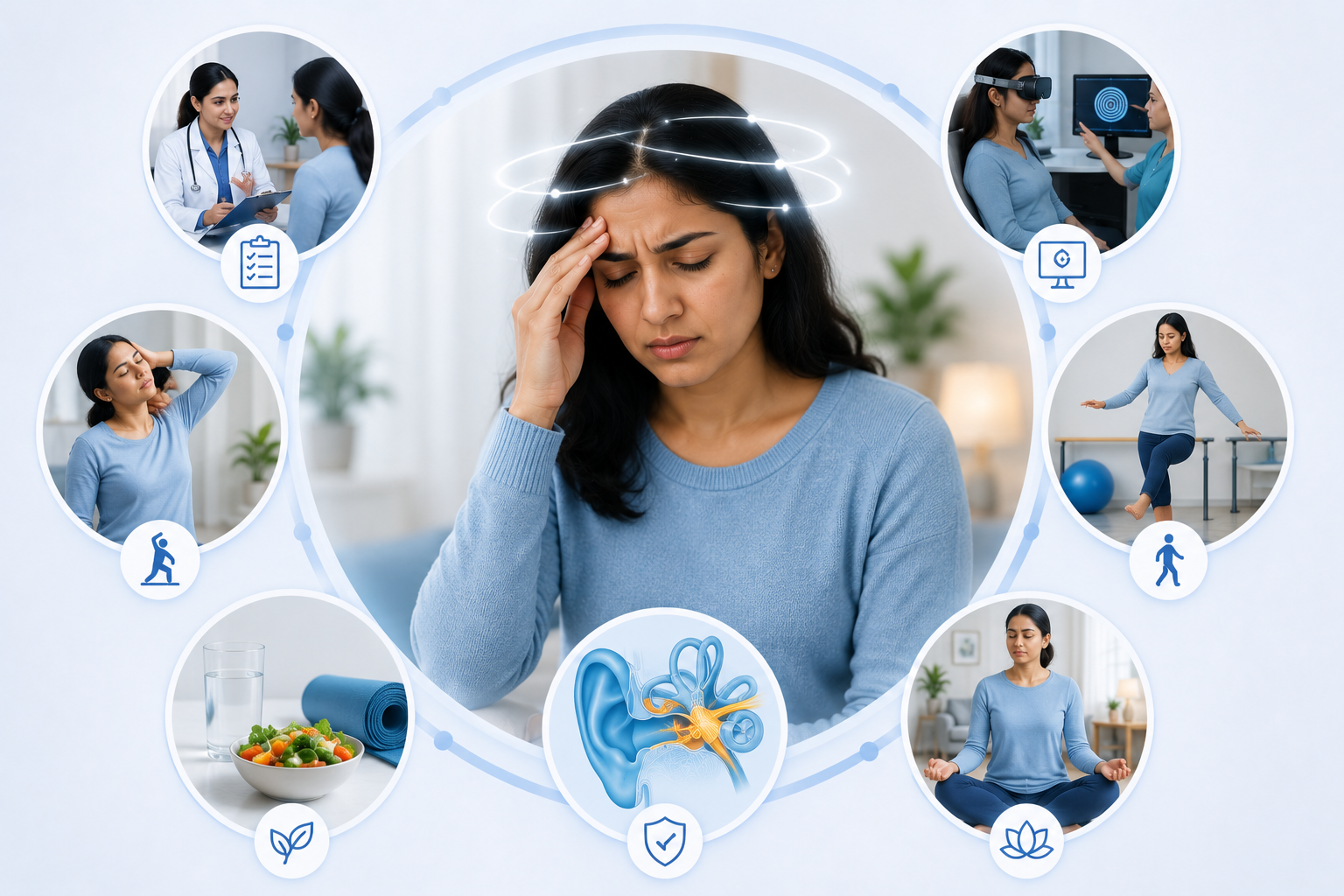
Dizziness is a common symptom. Many people describe it in different ways. Some feel lightheaded. Some feel unsteady. Others feel disconnected from their body.
If you are wondering what dizziness is, it is not a single condition. It is a general term used for different sensations. You may feel faint, off balance, or unsure of your movement.
Dizziness is different from vertigo. Vertigo creates a spinning feeling. Dizziness usually does not. This is why people often compare vertigo and dizziness or ask why they feel off balance without spinning.
Many people ask why they feel dizzy or why it keeps happening. The answer often depends on patterns and triggers rather than one single cause.
Symptoms
Dizziness symptoms vary from person to person.
Common symptoms include:
Lightheadedness
You may feel like you might faint.
Unsteadiness
You may find it hard to stay balanced.
Floating feeling
You may feel disconnected from your body.
Blurred or dim vision
This may happen during sudden episodes.
Nausea
This may occur, but it is usually mild.
Some people experience dizziness and giddiness together. Others notice headache and dizziness, which may point to a specific cause. Dizziness itself is a symptom. It is not a diagnosis. The pattern of symptoms helps guide evaluation.
Causes
To understand dizziness, it is important to look at different systems in the body.
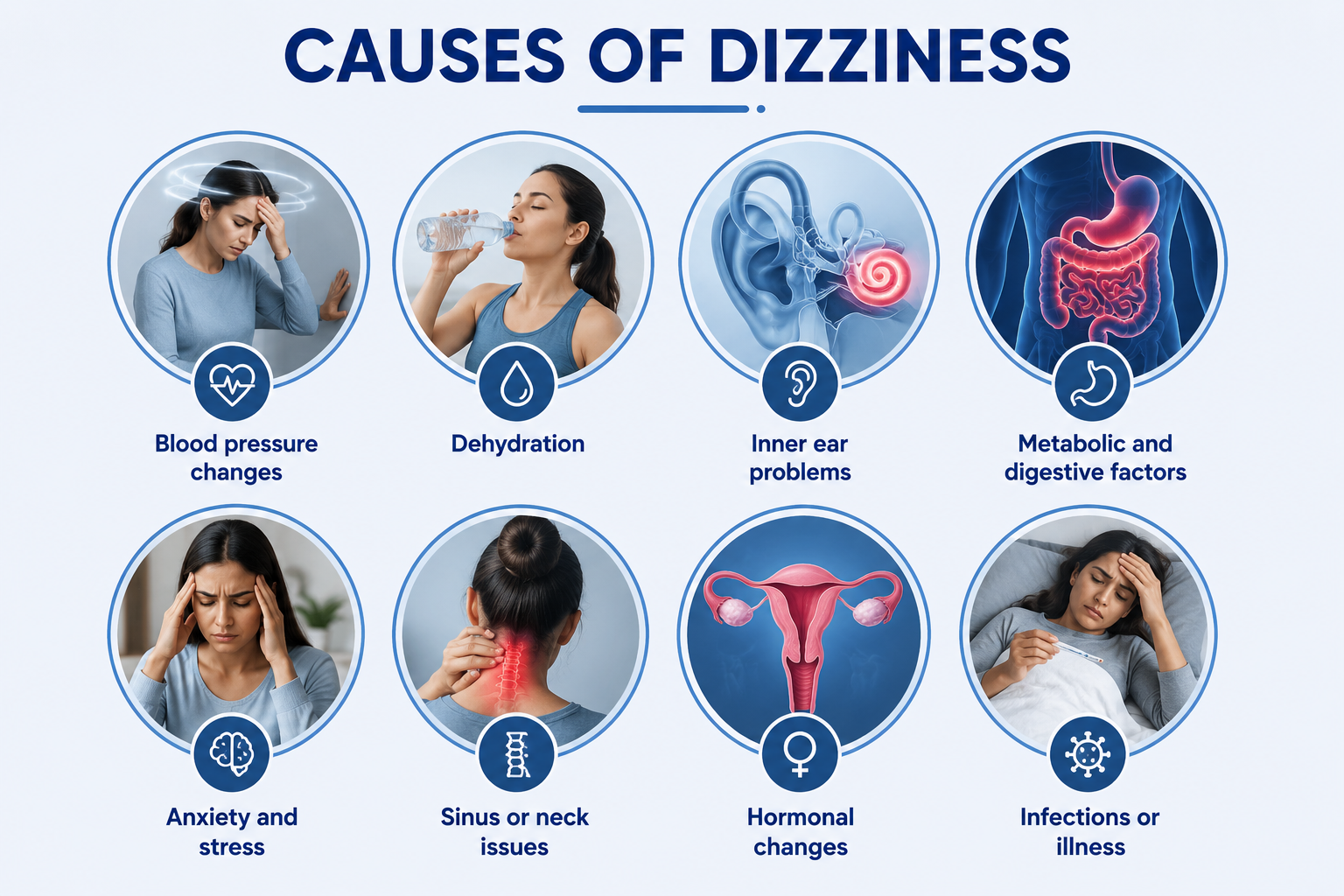
Common causes include:
- Blood pressure changes A drop in blood pressure when standing can cause sudden dizziness. This often explains dizziness when getting up or standing after sitting.
- Dehydration Low fluid intake can reduce blood flow and lead to lightheadedness.
- Inner ear problems The inner ear helps control balance. Disturbance here can lead to dizziness.
- Metabolic and digestive factors Some people notice dizziness with acidity or gastric discomfort. These are not always direct causes but may contribute.
- Anxiety and stress Anxiety can affect breathing and body awareness. This can lead to dizziness.
- Sinus or neck issues Sinus pressure or cervical spine problems may affect balance in some cases.
- Hormonal changes This is seen in some women during certain phases or in pregnancy.
- Infections or illness Dizziness may occur during viral illness, though it is rarely the main symptom.
Dizziness may also occur in specific situations: when lying down, while sleeping or on waking, in the morning, or during sudden position change. These patterns help identify the cause.
Types of Dizziness
Dizziness can be grouped based on how it feels.
A feeling of near fainting. Often linked to blood pressure or dehydration.
A sense of imbalance without spinning. This is often confused with balance disorders.
A general feeling of discomfort or disorientation. These types help explain why dizziness feels different in each person.
Risk Factors
Some factors increase the chance of dizziness.
- Sudden changes in posture
- Dehydration
- Poor sleep
- Stress
- Medical conditions
- Age-related changes
- These factors often combine rather than act alone
Complications
Dizziness is not always serious, but it can affect daily life.
Possible complications include:
- Risk of falls Unsteadiness can increase the chance of falling.
- Difficulty focusing Concentration and daily tasks may be affected.
- Reduced confidence while walking Fear of dizziness episodes can affect movement and independence.
- Avoidance of activity People may limit their activities to avoid triggering symptoms.
- Increased anxiety Repeated dizziness can also increase anxiety, which may worsen symptoms.
Diagnosis
Diagnosis begins with a clear history.
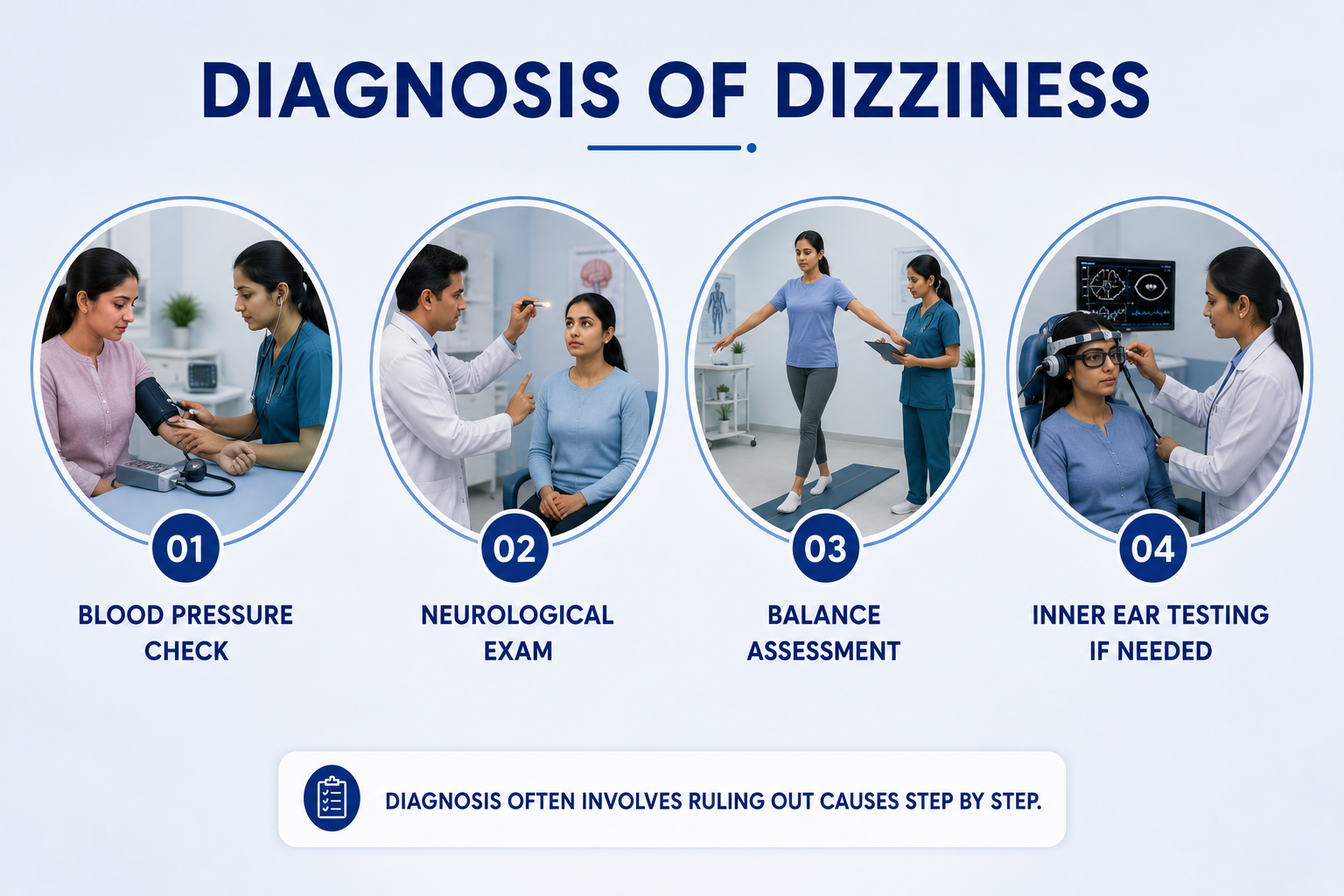
Doctors assess when symptoms started, what triggers them, and how long they last. Examination may include:
Blood pressure check
Neurological exam
Balance assessment
Inner ear testing if needed
Diagnosis often involves ruling out causes step by step.
Treatment Approach
Dizziness treatment depends on the cause.
Immediate care
- If you feel dizzy, sit or lie down.
- Avoid sudden movement. These steps can reduce symptoms.
Targeted and long-term care
Care focuses on:
- Managing blood pressure
- Improving hydration and nutrition
- Treating underlying conditions
- Medication may be used in some cases, but not always
- Finding the cause — the key step in managing dizziness effectively
Recovery and Self-Care
Simple steps can help reduce dizziness.
- Drink enough fluids Staying hydrated helps maintain blood flow and reduces lightheadedness.
- Stand up slowly Avoid sudden position changes to prevent blood pressure drops.
- Eat regular meals Maintaining consistent nutrition supports stable body function.
- Get enough sleep Rest is important for overall balance and wellbeing.
- Manage stress Reducing anxiety and stress can help ease dizziness episodes over time.
Prevention
Prevention focuses on reducing triggers.
Steps include:
Avoid sudden posture changes
Stay hydrated
Maintain regular sleep
Manage stress
Treat existing health issues
Understanding your pattern helps prevent recurrence.
When to Seek Care
Seek medical advice if dizziness is frequent, worsening, or associated with other symptoms.
Even if symptoms improve, do not ignore them. If dizziness keeps returning, it should be evaluated to find the cause.
What to Prepare Before an Appointment
A little preparation can make your visit more useful. It helps your doctor understand your symptoms clearly.
You can prepare by noting:
Your symptoms
Try to keep it simple. Think about:
- When did the symptoms start?
- How often do they occur?
- What makes them better or worse?
- How long do they last?
Your medical history
Include past illnesses and any family history of neurological conditions.
Medications you take
List all medicines, vitamins, and supplements.
Questions you want to ask
Write them down so you don't forget during the visit.
Support person (if needed)
You may bring a family member or friend to help remember details.
Important health details
Inform your doctor if you have medical devices, take blood thinners, or have a bleeding condition.