
Overview
A headache is one of the most common symptoms people experience. Almost everyone has had one at some point. But not all headaches are the same. They differ in location, intensity, duration, and cause.
If you are wondering why headaches happen, it helps to understand that a headache is not a single condition. It is a symptom. It can come from muscle strain, nerve activity, blood flow changes, or other triggers.
Some headaches are mild and pass on their own. Others come back often or affect daily life. Conditions like migraine or cluster headaches can be more intense and need proper evaluation. The pattern of the headache usually gives the most useful clues.
Symptoms
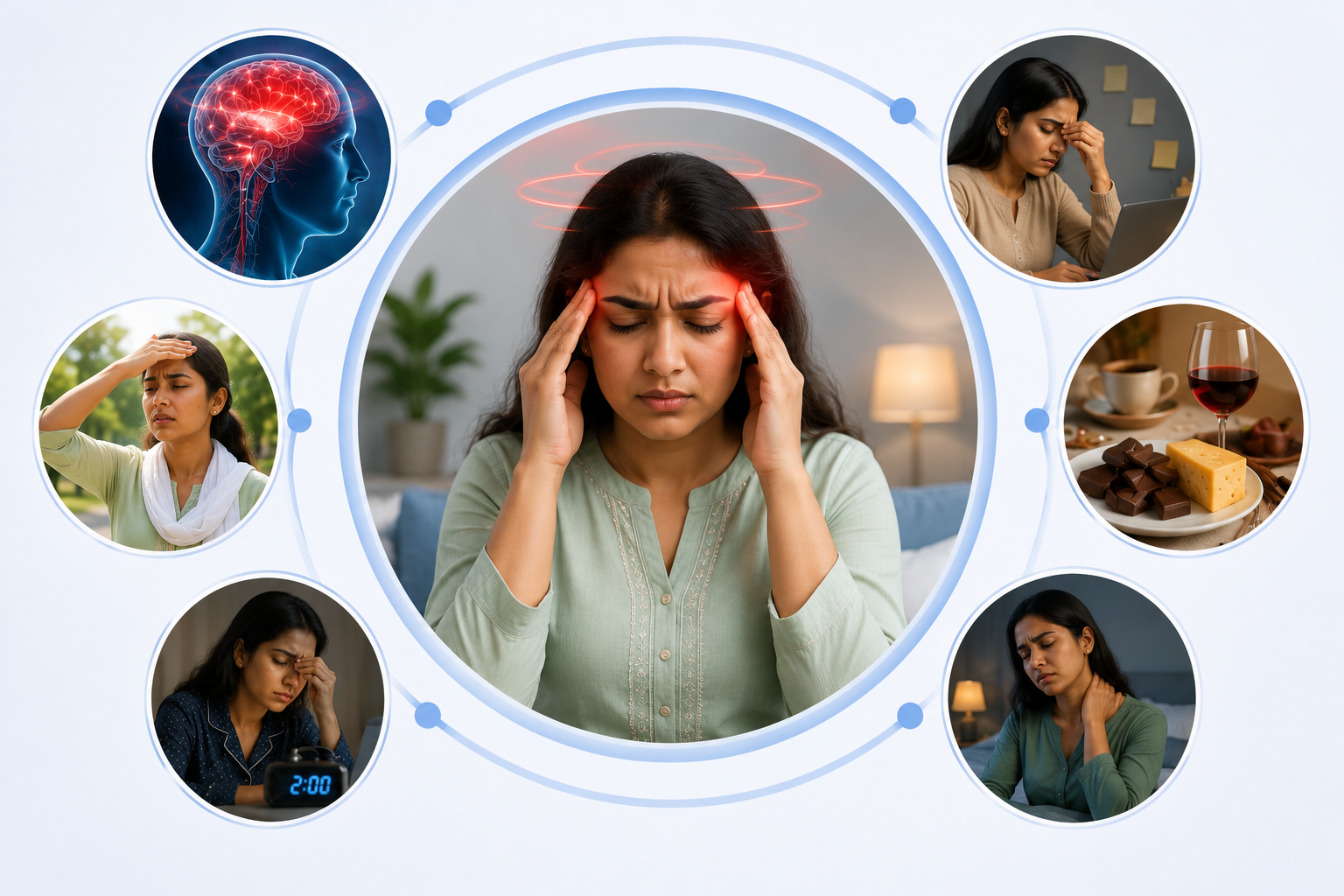
Headache symptoms can vary based on the type.
Common features include:
Pain in the head or face
The pain may feel dull, sharp, heavy, or throbbing.
One-sided pain
Pain on one side, such as a left or right side headache, is often seen in migraine.
Pressure in the forehead or cheeks
This is common in sinus-related headaches.
Tight, band-like discomfort
This type of pain is typical of tension headache.
Severe pain
Intense pain may occur in migraine or cluster headaches.
Some people also report nausea, sensitivity to light or sound, blurred vision, or headache with dizziness. Not every symptom appears each time. The way symptoms repeat over time often helps identify the type.
Causes
Headache causes are not always simple. In many cases, more than one factor is involved.
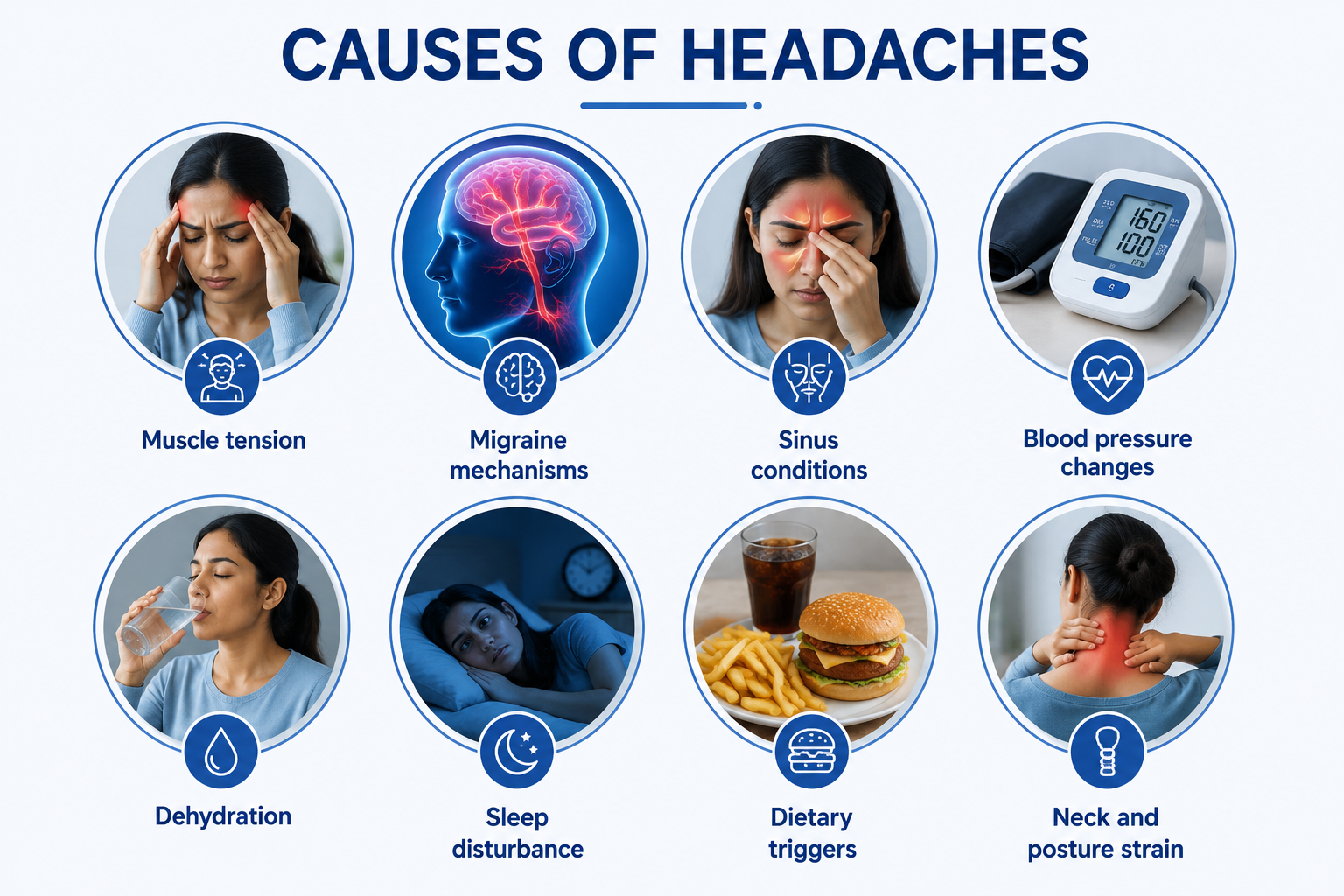
Common causes include:
- Muscle tension This is one of the most frequent causes. It is often linked to stress, poor posture, or long periods of screen use.
- Migraine mechanisms Migraine involves changes in brain signaling and blood flow. Triggers may include light, sound, strong smells, or certain foods.
- Sinus conditions Sinus inflammation or infection can lead to pressure in the face and head.
- Blood pressure changes Very high blood pressure may cause headache. Mild increases usually do not.
- Dehydration Low fluid intake can lead to headaches, especially later in the day.
- Sleep disturbance Poor sleep or irregular sleep patterns can trigger headaches.
- Dietary triggers Skipping meals or consuming certain foods may play a role.
- Neck and posture strain Pain may begin in the neck and spread to the head. This is common in people who sit for long periods.
Some people notice headaches almost every day. This may be due to repeated triggers, stress, or poor sleep. Headaches can also occur during viral illness. In such cases, they are usually one of several symptoms.
Types of Headaches
There are several types of headaches, each with a different pattern.
This is the most common type.
- Feels like a tight band around the head
- Usually affects both sides
- Linked to stress, posture, or fatigue
Often affects one side of the head.
- Pain is throbbing in nature
- May include nausea, light sensitivity, or sound sensitivity
- Can last for hours or longer
Severe pain, often around one eye.
- Occurs in repeated episodes over days or weeks
- Each episode may be short but intense
Pressure in the forehead, cheeks, or around the eyes.
- Often linked to sinus congestion
- May worsen when bending forward
May occur with very high blood pressure. Often described as heavy or pulsating. Needs evaluation if it persists. Each type has a different cause and requires a different approach.
Risk Factors
Some factors increase the chance of headaches.
- Stress
- Poor posture
- Dehydration
- Irregular sleep
- Skipped meals
- Hormonal changes
- Long screen exposure
These factors often overlap. Small changes in routine can reduce frequency.
Complications
Most headaches are not dangerous. However, frequent headaches can affect daily life.
Possible complications include:
- Difficulty concentrating Persistent pain can make it hard to focus on tasks.
- Poor sleep quality Headaches can disrupt sleep and worsen fatigue.
- Reduced work performance Frequent episodes can affect productivity and daily function.
- Increased stress Frequent use of pain medication may lead to medication overuse headache, where headaches become more frequent over time.
Diagnosis
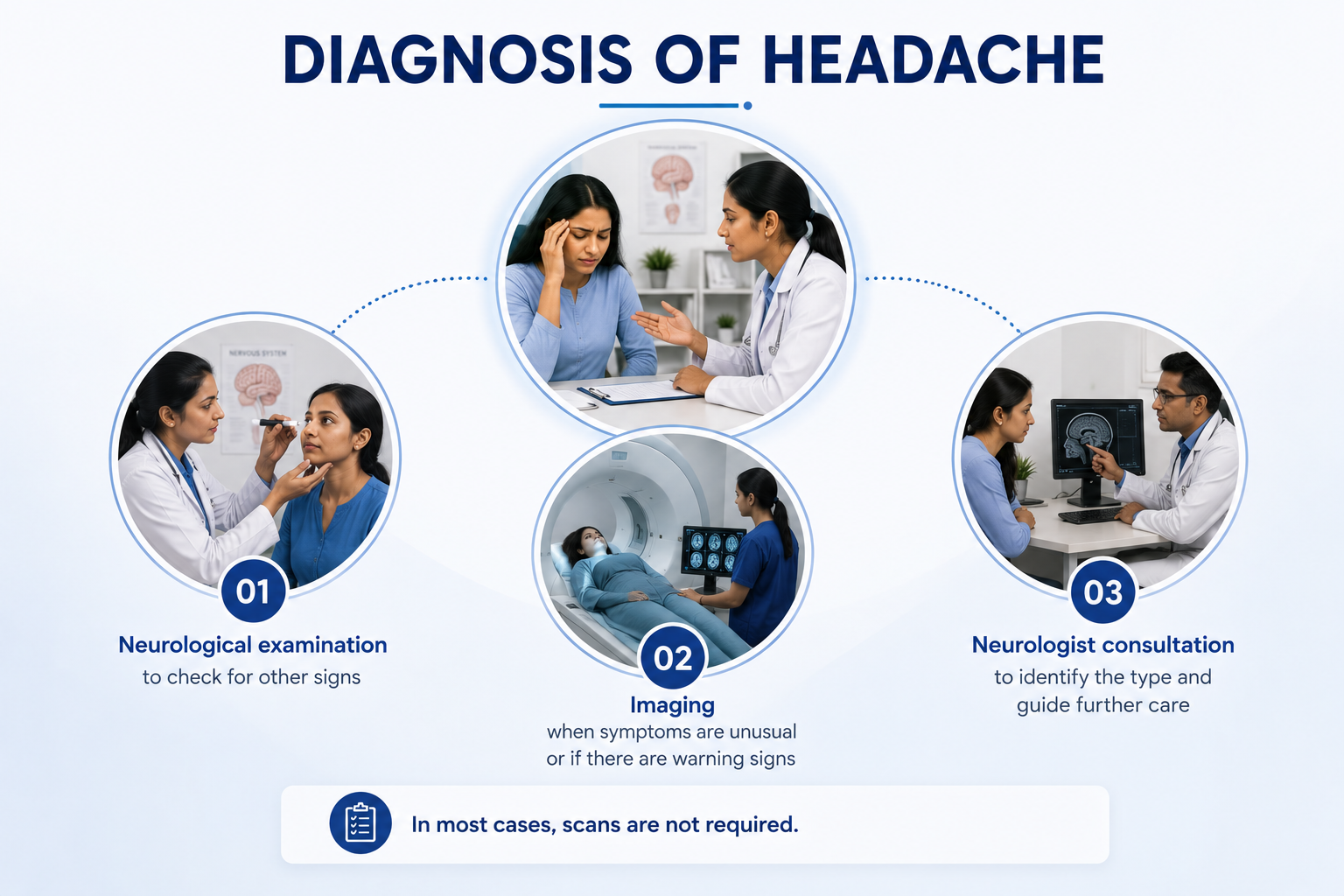
Diagnosis begins with a clear history.
Doctors look at where the pain occurs, how long it lasts, how often it happens, and what triggers it.
Neurological examination to check for other signs
Imaging when symptoms are unusual or if there are warning signs
Neurologist consultation to identify the type and guide further care
In most cases, scans are not required.
Treatment Approach
Headache treatment depends on the type and frequency.
Immediate relief
- Rest in a quiet space
- Drink water
- Use a cold or warm compress
- Some headaches require medication, especially in migraine or severe cases
Long-term management
For frequent headaches, focus on:
- Identify triggers
- Maintain regular sleep
- Stay hydrated
- Reduce screen strain
- Manage stress
Long-term control works better than repeated short-term relief.
Recovery and Self-Care
Daily habits play a key role in managing headaches.
- Keep a regular sleep schedule Consistent sleep and wake times help reduce headache frequency.
- Drink enough fluids Staying hydrated throughout the day can prevent dehydration-related headaches.
- Take breaks during screen use Regular breaks reduce eye and neck strain that can trigger headaches.
- Maintain proper posture Good posture reduces tension in the neck and shoulders.
- Eat meals at regular times For migraine, avoiding known triggers can reduce episodes. For sinus headaches, treating sinus issues helps reduce symptoms.
Prevention
Preventing headaches depends on consistency.
Steps that help include:
Regular sleep and wake time
Adequate hydration
Balanced meals
Good posture
Stress control
Understanding your own pattern helps prevent recurrence.
When to Seek Care
Seek medical advice if headaches are affecting your daily life.
Early evaluation helps identify the cause and guide treatment.
What to Prepare Before an Appointment
A little preparation can make your visit more useful. It helps your doctor understand your symptoms clearly.
You can prepare by noting:
Your symptoms
Try to keep it simple. Think about:
- When did the symptoms start?
- How often do they occur?
- What makes them better or worse?
- How long do they last?
Your medical history
Include past illnesses and any family history of neurological conditions.
Medications you take
List all medicines, vitamins, and supplements.
Questions you want to ask
Write them down so you don't forget during the visit.
Support person (if needed)
You may bring a family member or friend to help remember details.
Important health details
Inform your doctor if you have medical devices, take blood thinners, or have a bleeding condition.