
Overview
Sleep disorders affect how you fall asleep, stay asleep, or wake up. Many people have poor sleep at times. But when sleep problems happen often, they may point to a sleep disorder.
If you are asking what is sleep disorder, it means a condition that disrupts normal sleep. Sleep is controlled by the brain in clear cycles. When these cycles are disturbed, sleep becomes irregular or unrefreshing.
These are also called sleep related disorders. They can affect energy, mood, and focus during the day. Understanding the types of sleep disorders helps identify the problem and plan care.
Symptoms
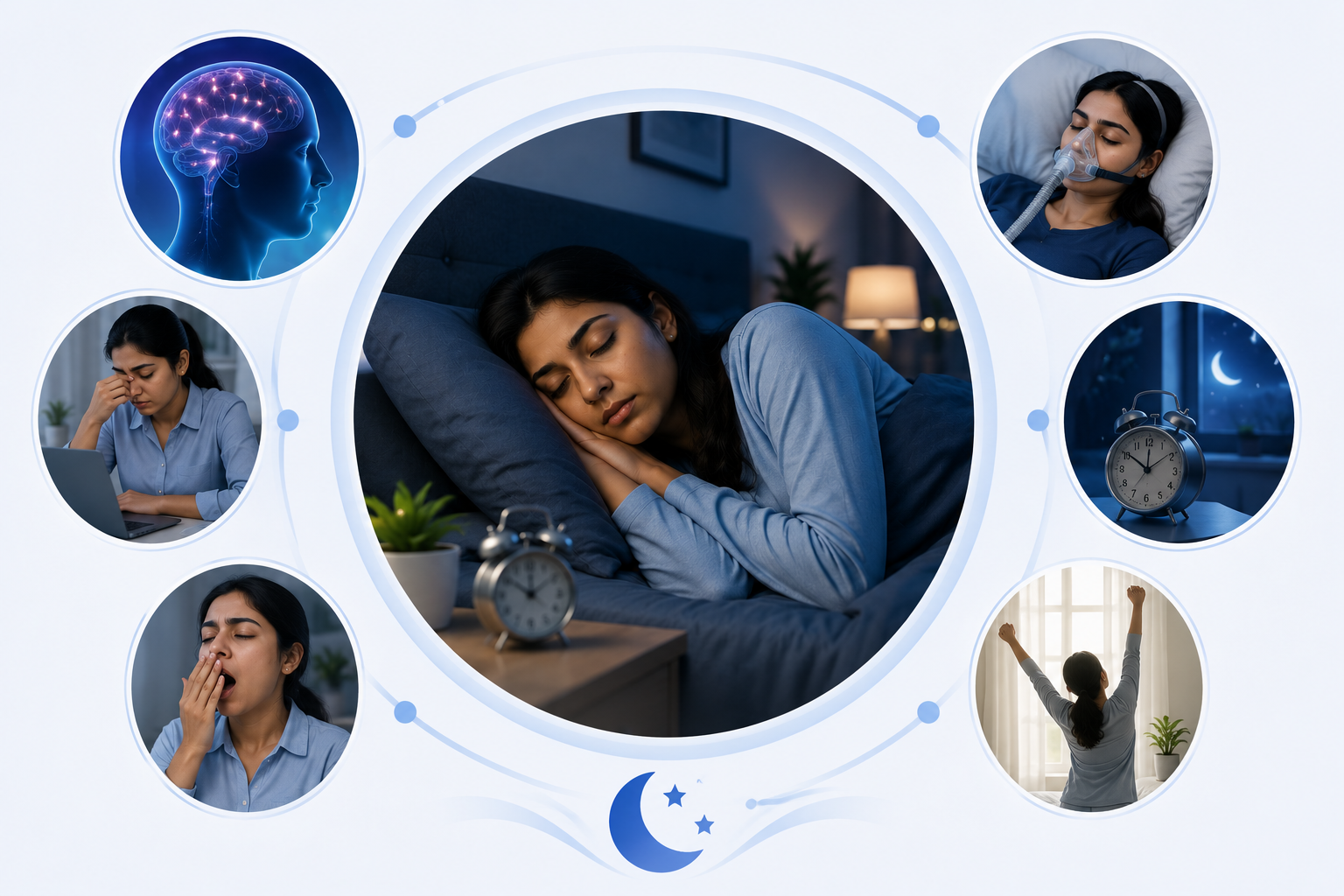
Sleep disorders symptoms often affect both night and day.
Common symptoms include:
Trouble falling asleep
You lie awake for long periods.
Frequent waking
Sleep breaks through the night.
Daytime tiredness
You feel tired even after sleeping.
Irregular sleep timing
Sleep and wake times keep shifting.
Poor focus
It becomes hard to concentrate.
Some people notice specific patterns. For example, late sleep timing in delayed sleep phase disorder, or breathing pauses during sleep. The symptoms often depend on the type of sleep disorder.
Causes
To understand what causes sleep disorders, it helps to look at how sleep is controlled.
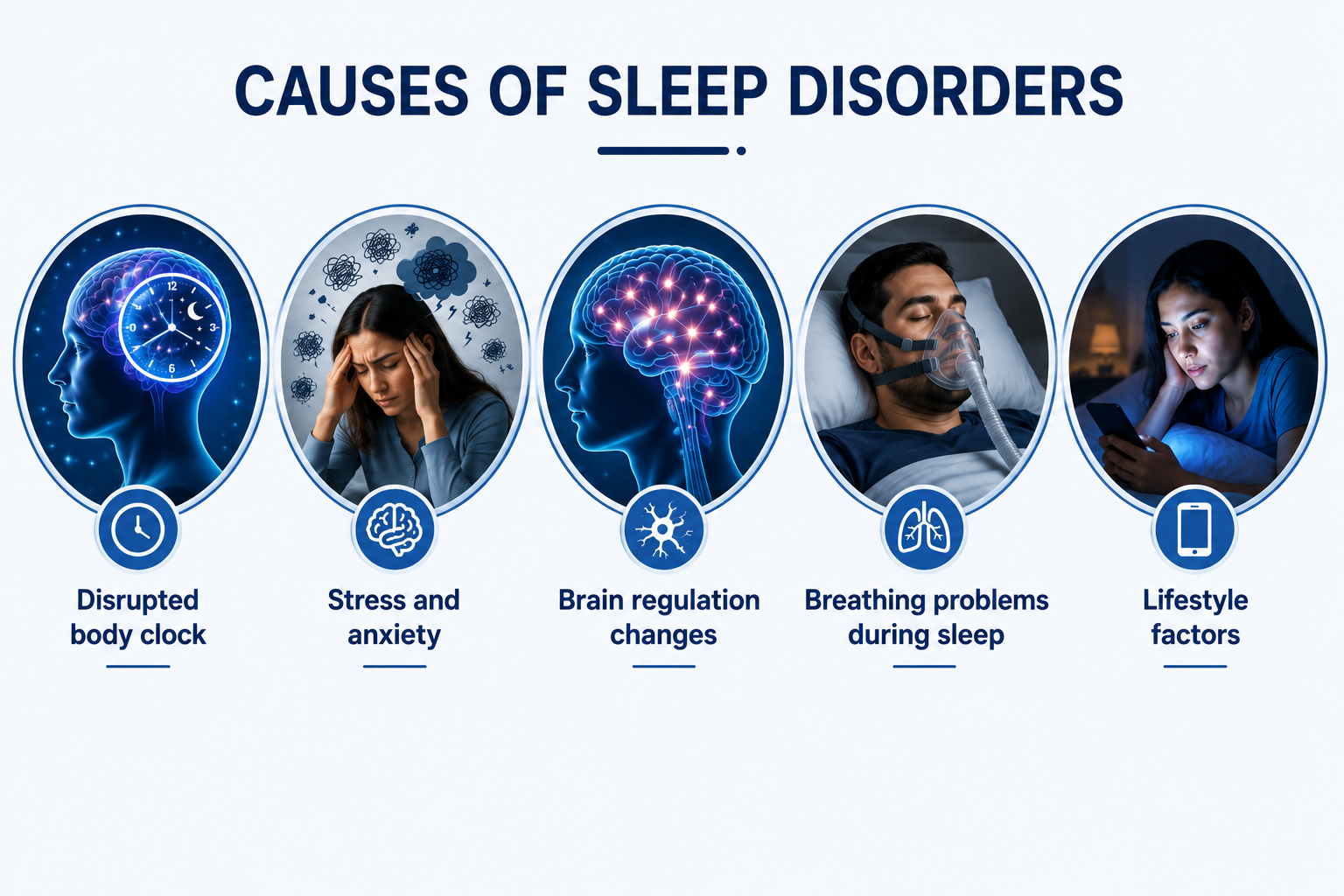
Common causes of sleep disorders include:
- Disrupted body clock The brain controls sleep timing. Irregular schedules can disturb this system.
- Stress and anxiety These make it harder to fall or stay asleep.
- Brain regulation changes Sleep depends on nerve signals. When these change, sleep can be affected.
- Breathing problems during sleep Conditions like sleep apnea disturb sleep cycles.
- Lifestyle factors Late screen use, irregular meals, and poor sleep habits.
In most cases, more than one factor is involved. Sleep problems can also occur in children. Sleep disorders in children may show as delayed sleep, restlessness, or poor sleep routines.
Types of Sleep Disorders
There are several types of sleep disorders. Each has a different pattern.
Trouble falling or staying asleep.
Includes sleep apnea, where breathing pauses during sleep.
The sleep-wake cycle is out of sync. One example is delayed sleep phase disorder.
Repeated movements disturb sleep.
Excess sleepiness during the day. This forms the classification of sleep disorders.
Risk Factors
Some factors increase the risk of sleep problems.
- Irregular sleep schedule
- High stress
- Shift work
- Medical or neurological conditions
- Age-related changes
These often act together.
Complications
Sleep disorders can affect daily life.
Common effects include:
- Ongoing tiredness Persistent fatigue that does not improve with rest.
- Poor concentration Difficulty staying focused on tasks throughout the day.
- Mood changes Sleep disruption can affect emotional regulation and wellbeing.
- Reduced performance at work or school Over time, poor sleep can affect overall health.
Diagnosis
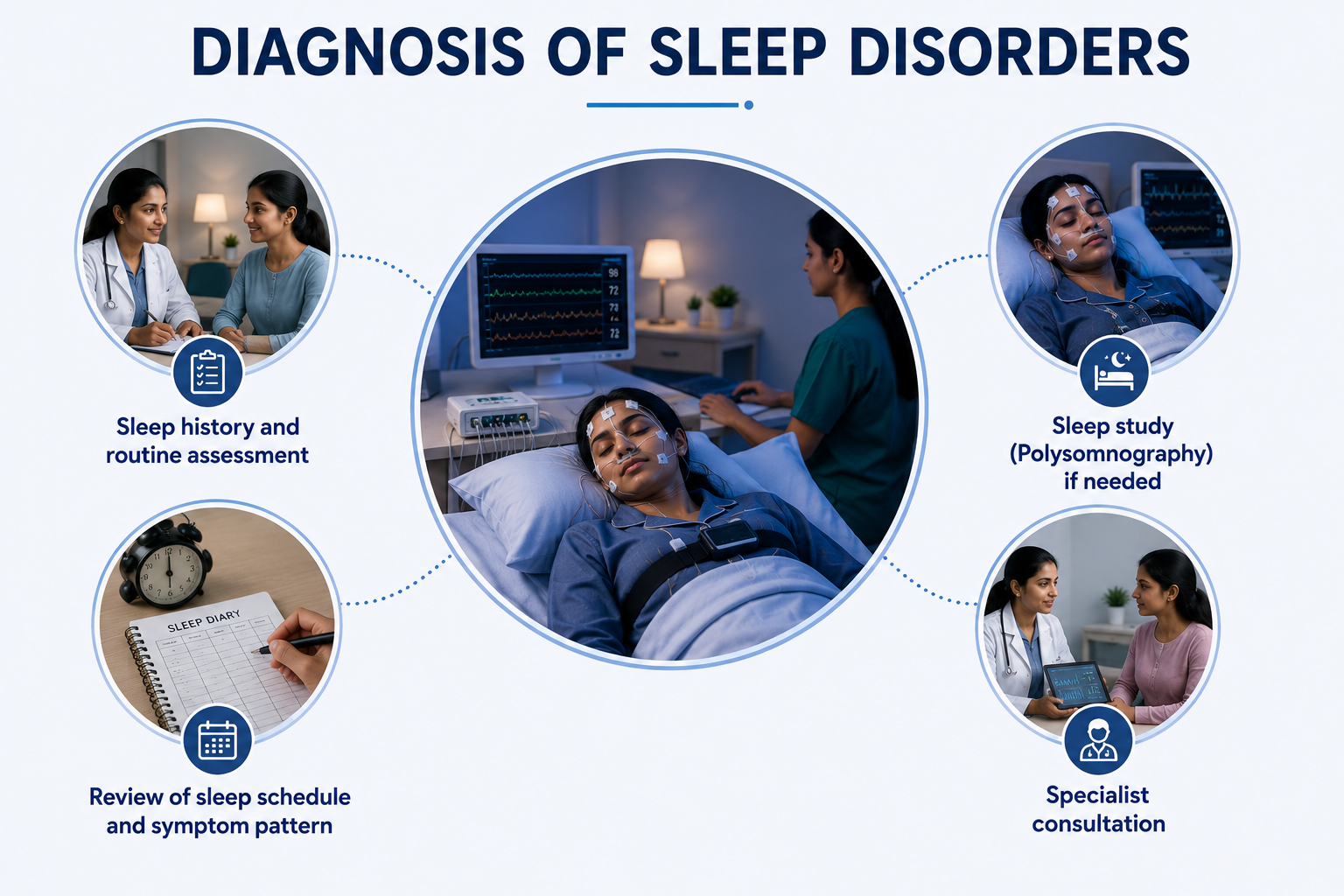
Diagnosis starts with understanding your sleep pattern.
Assessment of sleep habits and routine
Review of daily schedule and symptom pattern
Sleep study if needed
Neurologist or sleep specialist consultation
Treatment Approach
Sleep disorder treatment depends on the cause.
First steps
Simple changes often help:
- Fixed sleep and wake times
- Less screen time at night
- A quiet, dark sleep setting
Targeted and long-term care
Depending on the type of disorder:
- Treating breathing problems
- Correcting sleep timing issues
- Medicine for sleep disorder may be used in some cases
- Some conditions improve well; others need ongoing care
Recovery and Self-Care
Daily habits play a key role.
- Keep a fixed sleep schedule Going to bed and waking at the same time each day supports the body's natural sleep cycle.
- Avoid screens before bed Reducing screen exposure in the evening helps the brain prepare for sleep.
- Eat at regular times Consistent meal timing supports a stable body clock.
- Manage stress Addressing stress helps reduce the mental activity that interferes with sleep.
Prevention
Healthy habits reduce the risk of sleep problems.
Sleep at the same time each day
Stay active during the day
Limit late-night screen use
Address stress early
Understanding what causes sleep disorders helps prevent them.
When to Seek Care
Seek medical advice if sleep problems are affecting your daily function.
Early care helps identify the problem and guide sleep disorder treatment.
What to Prepare Before an Appointment
A little preparation can make your visit more useful. It helps your doctor understand your symptoms clearly.
You can prepare by noting:
Your symptoms
Try to keep it simple. Think about:
- When did the symptoms start?
- How often do they occur?
- What makes them better or worse?
- How long do they last?
Your medical history
Include past illnesses and any family history of neurological conditions.
Medications you take
List all medicines, vitamins, and supplements.
Questions you want to ask
Write them down so you don't forget during the visit.
Support person (if needed)
You may bring a family member or friend to help remember details.
Important health details
Inform your doctor if you have medical devices, take blood thinners, or have a bleeding condition.