Early Warning Signs of Stroke That Must Never Be Ignored
There are some symptoms the body gives us that are easy to dismiss. A brief moment of weakness. A slight change in speech. A short episode that passes on its own.
With stroke, these moments matter more than we realise.
A brain stroke does not always begin dramatically. In some cases, the early signs are brief, subtle, and easy to overlook. But these are often the moments that offer the best chance to act early.
When Symptoms Don’t Last, But Still Matter
One of the most common misconceptions is that symptoms must be severe to be serious.
Many people experience short episodes of weakness, slurred speech, or imbalance that resolve within minutes. These are often dismissed.
In reality, these may be warning signs of a brain stroke. Sometimes they occur as a temporary interruption in blood flow, often referred to as a transient event. Even when symptoms improve, the underlying risk remains.
This is why understanding brain stroke symptoms is important, even when they appear mild.
Recognising the Signs
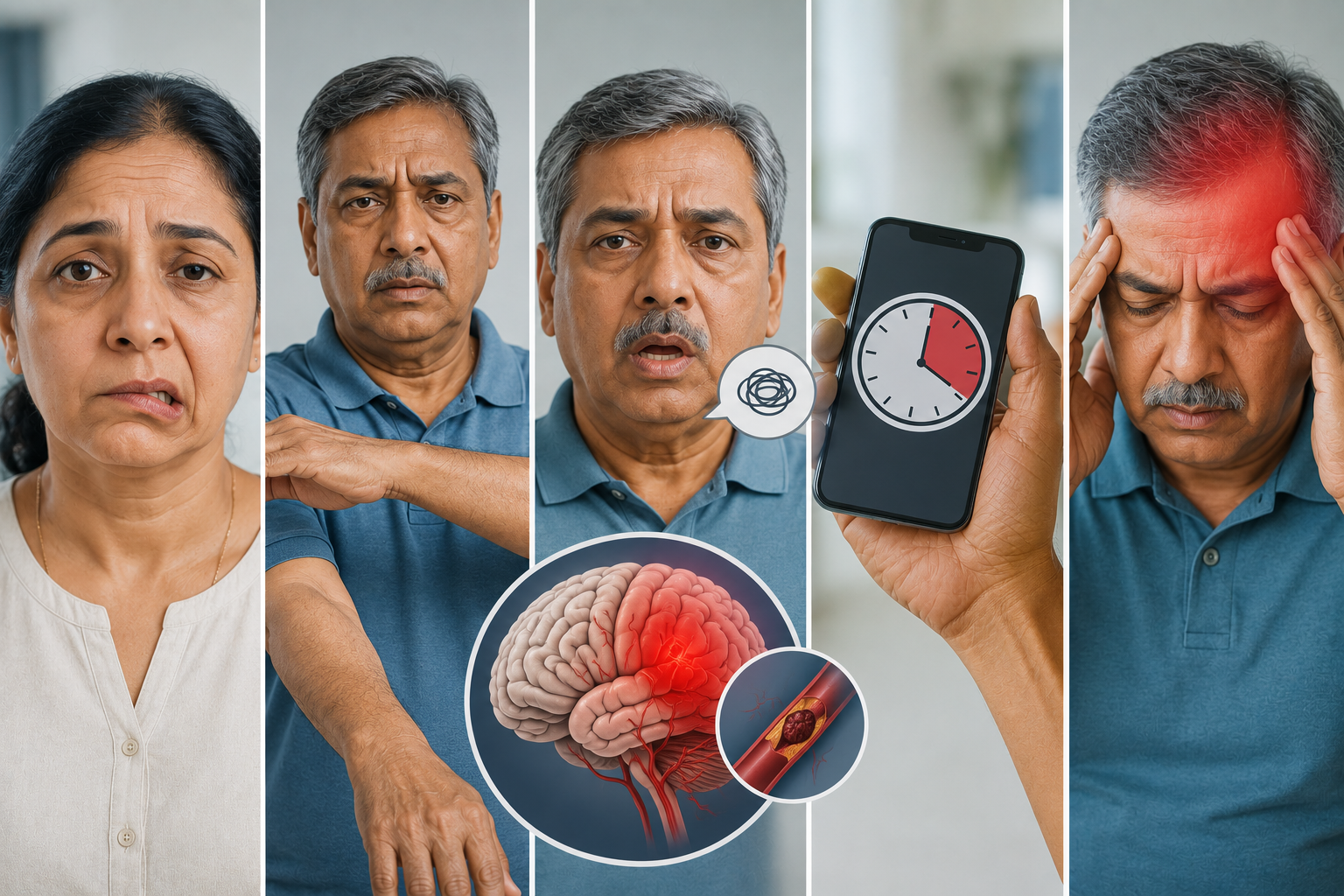
Stroke affects the brain, and the brain controls many essential functions. The signs depend on which area is affected, but some patterns are seen often.
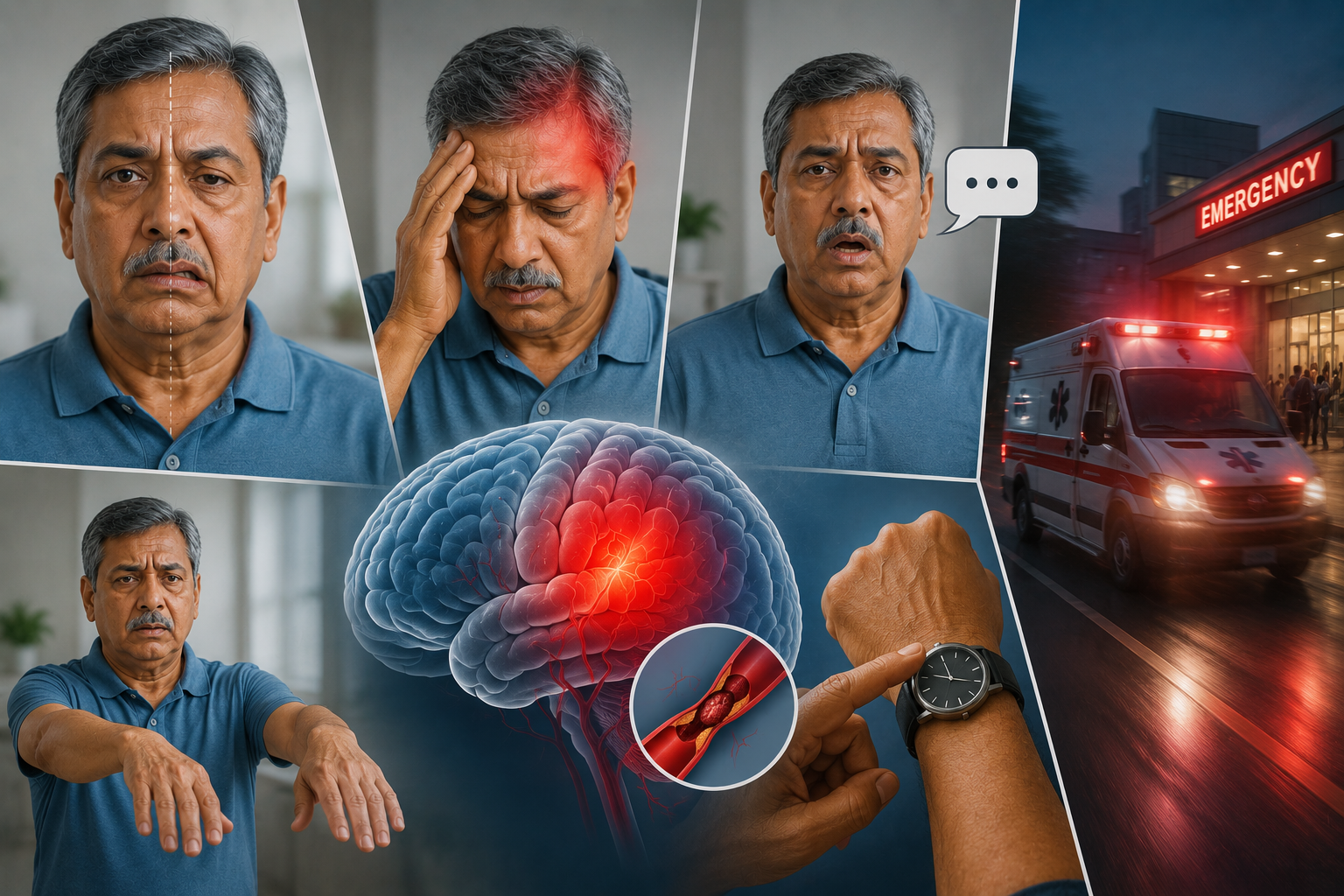
Common symptoms of brain stroke include:
- Sudden weakness on one side
The face may droop. An arm or leg may feel heavy or difficult to move. - Difficulty speaking or understanding
Speech may become unclear. Words may not come out as expected. - Vision changes
Blurred or partial loss of vision may occur. - Loss of balance
Walking may feel unsteady. There may be a sudden sense of imbalance. - Severe headache
A sudden headache with no clear cause may be present.
These symptoms often begin suddenly. They may last or improve quickly. Both situations need attention.
The Importance of Time
In stroke care, time plays a critical role.
There is a short window where early treatment can reduce brain damage. This period is often called the golden hour. During this time, restoring blood flow can help protect brain function.
This is why even brief symptoms should not be ignored. Waiting to see if they return can delay care.
Why Stroke Happens
To understand how brain stroke occurs, it helps to look at blood flow to the brain.
A stroke usually happens in one of two ways:
- Blocked blood flow
A clot blocks a blood vessel. This is the most common type. - Bleeding in the brain
A blood vessel ruptures and causes bleeding.
These are the main types of stroke in the brain, and each requires a different approach.
When people ask what causes brain stroke or what is the reason for brain stroke, the answer often involves multiple factors. Blood pressure, heart rhythm, and blood vessel health all play a role.
Who Is at Risk?
Stroke can affect anyone, but some factors increase risk.
Common brain stroke causes or risk factors include:
- High blood pressure
- Diabetes
- High cholesterol
- Smoking
- Heart conditions
- Lack of physical activity
These factors often build over time. This is why questions like how to avoid brain stroke or how to prevent brain stroke focus on long-term health.
Can a Stroke Be Prevented?
Prevention is possible in many cases.
Simple steps can reduce risk:
- Control blood pressure
- Manage blood sugar
- Stay physically active
- Avoid tobacco
- Maintain a balanced diet
These changes may seem small, but they play a major role in reducing risk over time.
What Happens After a Stroke?
A common concern is: what happens to the brain after a stroke?
When blood flow is disrupted, brain cells are affected. The extent of damage depends on how quickly treatment is given.
Some people recover well. Others may have lasting effects such as weakness, speech difficulty, or memory changes.
This leads to another important question: can a brain stroke patient recover fully?
Recovery varies. Some regain most functions, especially with early care and rehabilitation. Others may need longer support.
Recovery Is a Process
Recovery does not end with treatment. It continues over time.
People often ask how to recover from a brain stroke. Rehabilitation plays a key role. This may include:
- Physical therapy
- Speech therapy
- Daily activity training
In some cases, brain exercises for stroke recovery help improve function and coordination.
Progress may be gradual. The brain has the ability to adapt, but it needs time and support.
When to Seek Help
One of the most important things to remember is this: do not wait.
If you notice:
- Sudden weakness
- Speech changes
- Vision problems
- Loss of balance
Seek medical care immediately.
Even if symptoms improve, they should not be ignored. Early evaluation can prevent further damage.
A Final Thought
Stroke is not always loud or obvious in the beginning. Sometimes, it is quiet. Brief. Easy to dismiss.
But those early signs are often the body’s way of asking for attention.
Recognising them, and acting on them, can change the course of what happens next.